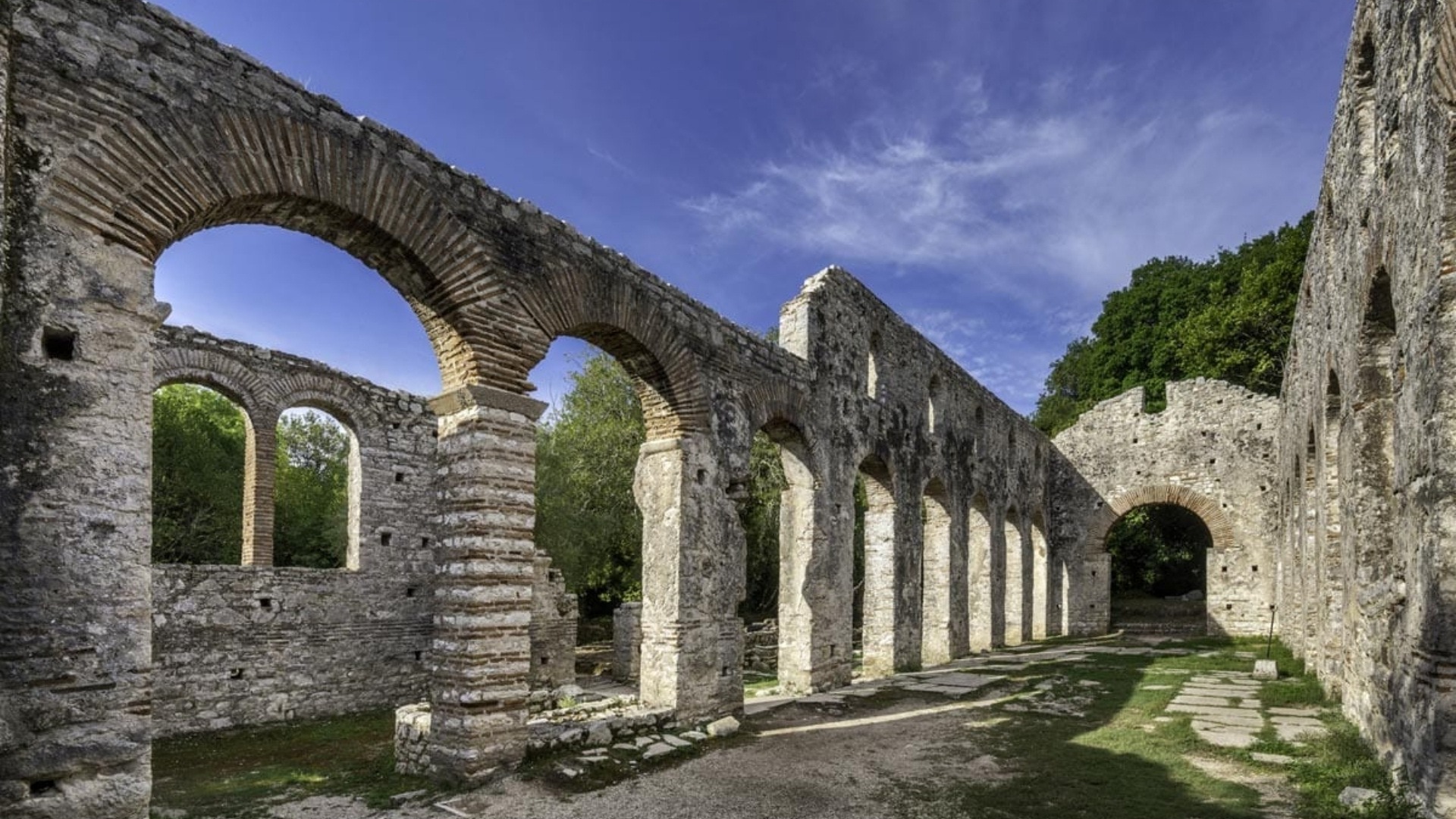
If you are planning a trip to the southern coast of Albania, there is one place that absolutely has to be on your list. Stepping into Butrint National Park feels like walking through a physical timeline of European civilisation. It is a rare spot where you can explore 2,500 years of history in a single afternoon, moving from Greek temples to Roman theatres and Byzantine basilicas. If you are visiting Butrint National Park in 2026, you are in for one of the most rewarding experiences in the entire Balkan region.
This guide is designed to give you a clear, practical look at what to expect when visiting Butrint. We will cover everything from the fascinating Butrint ruins and current Butrint ticket prices to the best ways to get there from Saranda or Ksamil. Whether you are a history buff or just someone who loves a beautiful walk in nature, this UNESCO World Heritage site offers something truly special.
Table of Contents
- The Story Behind the Ruins
- Getting to Butrint: Transport Guide
- Tickets, Times, and Practical Info
- Arrival: What to Expect First
- The Top Sights Inside the Park
- Pro Tips for Your Visit
- Nearby Attractions to Combine
- Common Questions Answered
The Fascinating Story Behind Butrint National Park
The history of this place is almost overwhelming when you stop to think about it. Butrint National Park was once a major port and a thriving city that saw the rise and fall of several great empires. It started as a Greek colony, then became a prosperous Roman city, and later served as a Byzantine outpost before the Venetians and Ottomans left their mark. This incredible layering of cultures is exactly why the Butrint archaeological site was granted Butrint UNESCO status back in 1992.
One of the most charming things about the Butrint ruins is the literary connection. In the Aeneid, Virgil describes Aeneas visiting Butrint and finding a “Little Troy” built on the shores of the Ionian Sea. Walking through the Butrint ruins Albania today, it is easy to see why ancient poets were so inspired by its location. It sits on a peninsula surrounded by the salt waters of Lake Butrint and the Vivari Channel, making it as much a nature reserve as it is a historical monument.
How to Get to Butrint National Park – Easy Travel Guide
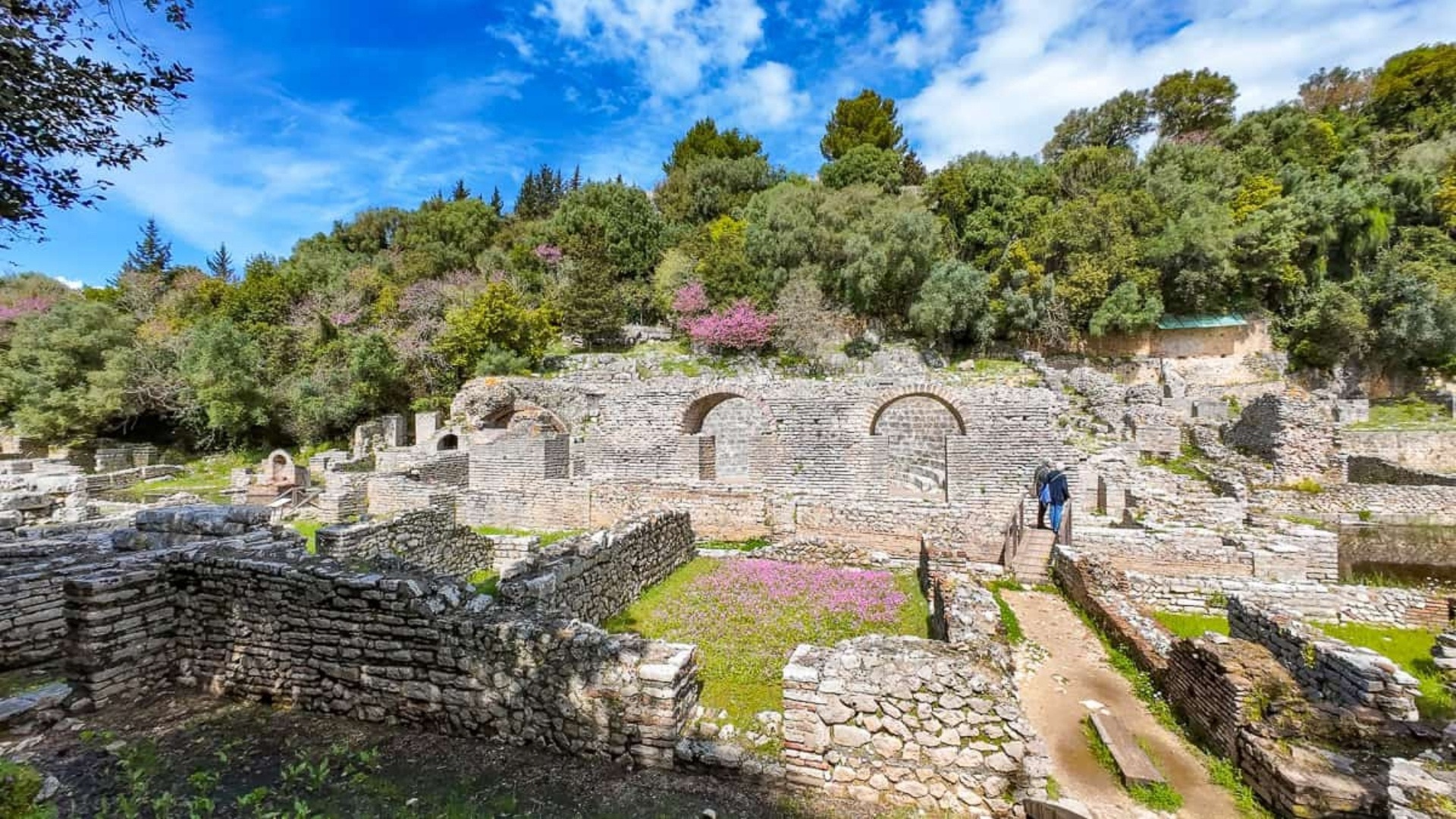 Planning your journey to the park is quite straightforward, especially if you are staying in the nearby coastal towns. Most visitors arrive from Saranda or the beach village of Ksamil, but it is also a popular day trip for people staying on the Greek island of Corfu.
Best time to visit Butrint
If you want to avoid the sweltering heat and the largest crowds, the best time to visit Butrint is undoubtedly during the shoulder seasons. Late April to early June or the month of September offer perfect walking weather. During these months, the park is lush and green, and you can explore the Butrint ruins comfortably without the mid-summer sun beating down on you.
Getting there from Saranda, Corfu, Tirana & Ksamil
The Saranda to Butrint route is the most common path for travellers. There is a local bus that runs every hour from the centre of Saranda, which is incredibly cheap and takes about 45 minutes. If you are in Ksamil, you are even closer; the park is just a ten-minute drive or a short bus ride south.
For those coming from further afield, how to get to Butrint usually involves a flight into Tirana followed by a four-hour drive south. Alternatively, many people take the ferry from Corfu to Saranda and then hop on the local bus.
You will also want to book your accommodation in advance, especially during peak travel months. Saranda and Ksamil both offer excellent options for every budget, from beachfront hotels to cozy guesthouses. I recommend checking prices on Booking.com or budget stays on Hostelworld to find the best deals before your trip.
| Transport Mode | Est. Time from Saranda | Est. Cost (2026) |
| Local Bus | 45 Minutes | 200 LEK (£2) |
| Taxi | 25 Minutes | 1500 – 2000 LEK (£14-£18) |
| Rental Car | 25 Minutes | Variable |
| Boat Tour | Variable | Part of a package |
I had also considered renting a car during my visit, which honestly makes exploring much easier. Having your own vehicle allows you to visit Butrint, Ksamil beaches, and the Blue Eye in one relaxed day. I normally compare prices using Qeeq since it shows multiple rental companies in one place.
Butrint ticket prices & opening hours (2026 update)
As of 2026, Butrint ticket prices for international visitors are roughly 1,000 LEK, which is about 8 to 10 pounds. The park usually opens at 8:00 AM and stays open until sunset. I highly recommend arriving as soon as the gates open. Not only do you beat the tour buses, but the morning light filtering through the trees makes the Butrint archaeological site look even more magical.
First Impressions – Arriving at Butrint National Park
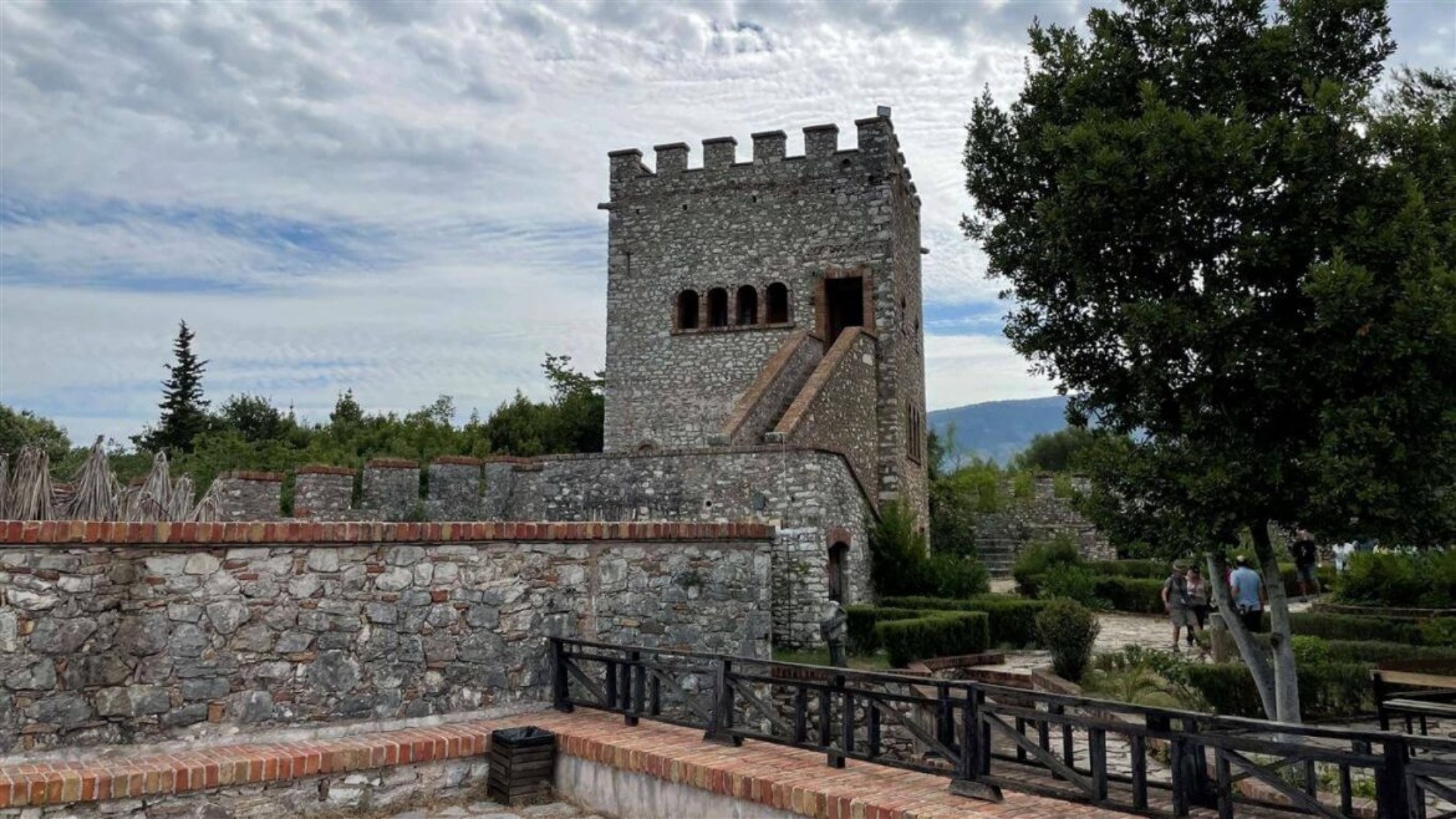 When you first arrive, you will find a small visitor centre near the entrance where you can buy your tickets and pick up a Butrint National Park map. There are basic facilities here, including toilets and a small café where you can grab a coffee before you head inside. The site generally feels very peaceful and well-maintained.
The walking paths are mostly shaded by ancient oak and olive trees, which is a massive relief during the warmer months. A standard visit usually takes about two to three hours if you want to see everything at a steady pace. While much of the path is flat, there are some stairs and uneven surfaces, so it is worth noting that some areas might be tricky for those with limited mobility.
What to Expect Inside Butrint National Park – Must-See Highlights
The things to do in Butrint are mostly centred around the incredible structures left behind by the Romans and Greeks. Here is a logical route to follow once you are inside the gates.
The Ancient Theatre & Forum
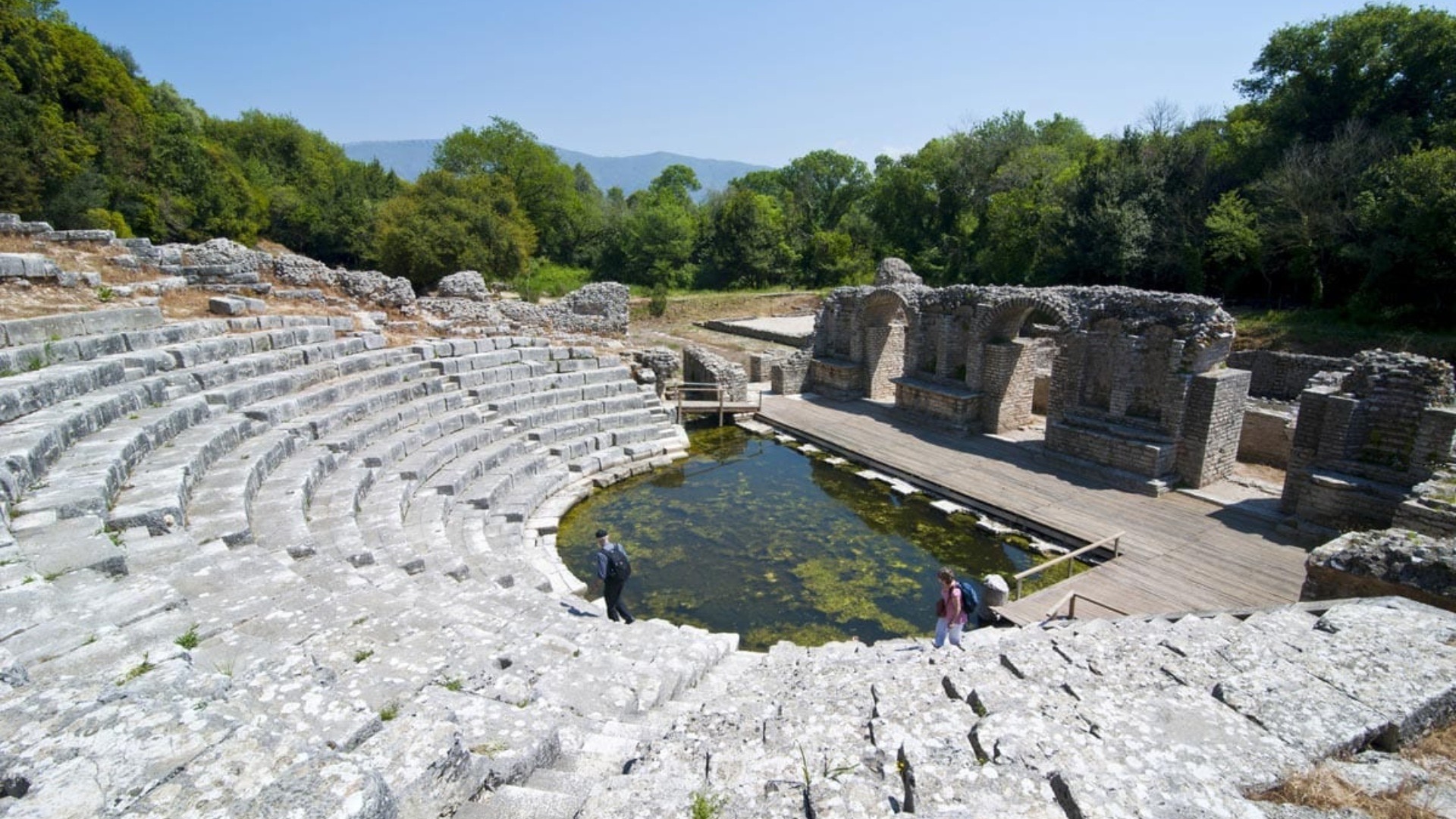 This is arguably the most famous part of the Butrint ruins. Built in the 3rd century BC, the theatre could once hold over 2,000 people. It is remarkably well-preserved, and you can still see the intricate carvings in the stone. Right next to it is the Roman Forum, which was the heart of the city’s public life.
The Baptistery & Mosaics
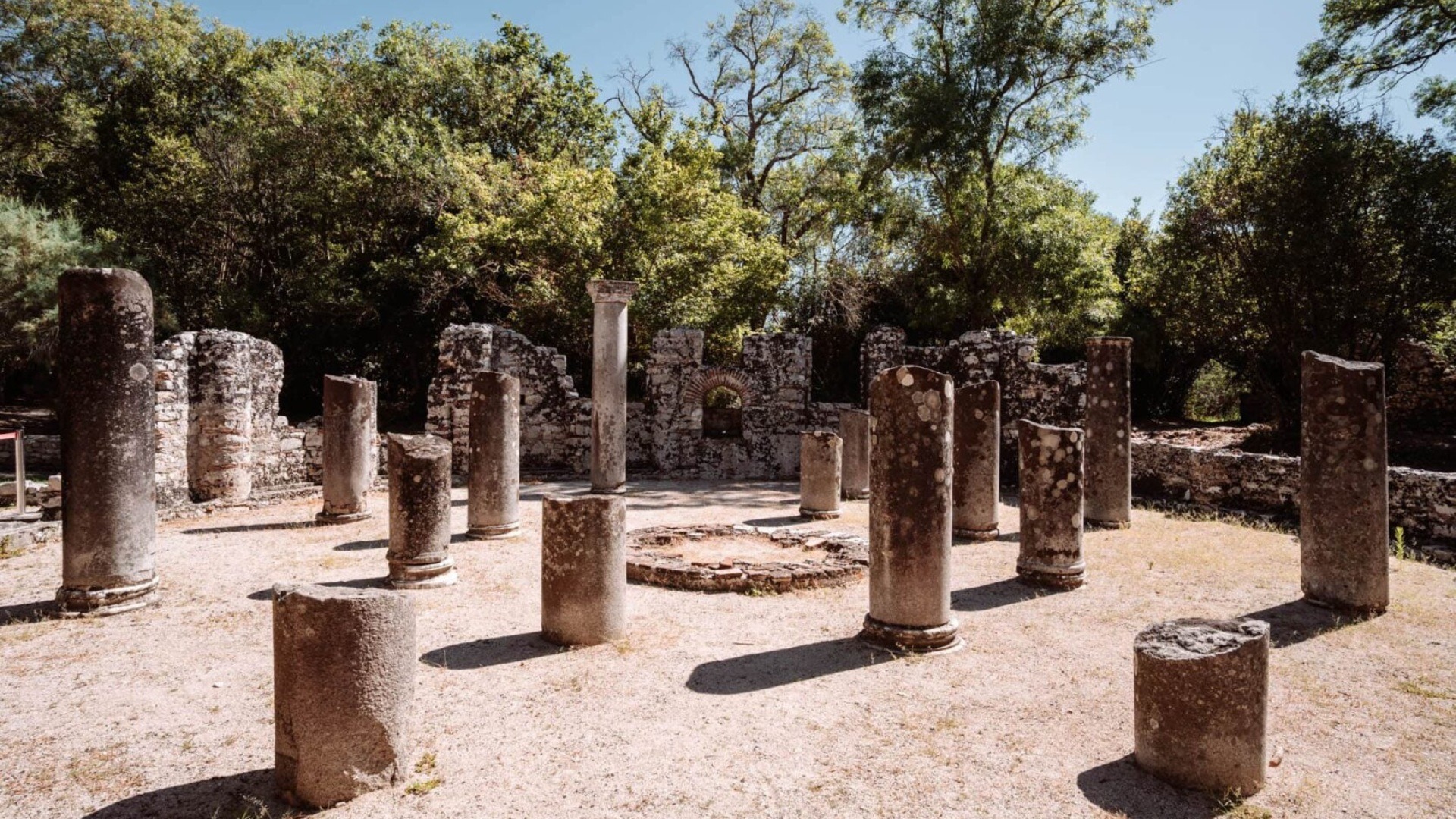 The 6th-century Baptistery is a masterpiece of Byzantine art. It features a stunning mosaic floor with colorful images of birds and sea creatures. To protect these delicate pieces from the elements, they are often covered with a layer of sand, but if you are lucky enough to be visiting Butrint when they are uncovered, it is a sight you will never forget.
The Lion Gate, Gymnasium & City Walls
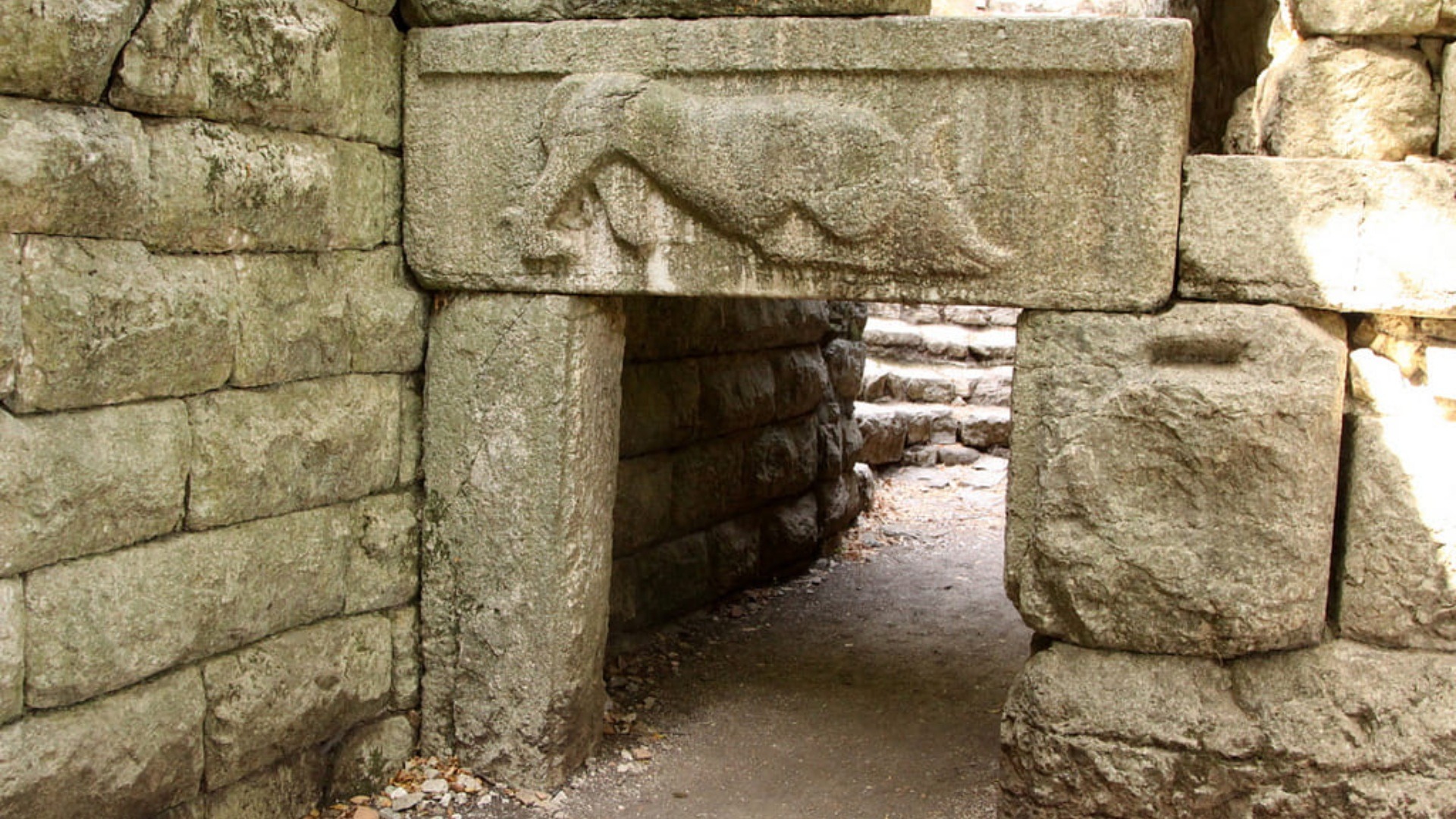
As you continue your walk, you will encounter the massive Cyclopean walls. The Lion Gate is a particularly cool spot; it features a relief of a lion devouring a bull’s head, which was placed there to protect the city entrance. Exploring these defensive structures gives you a real sense of how fortified and important this city once was.
Nature & Scenic Views
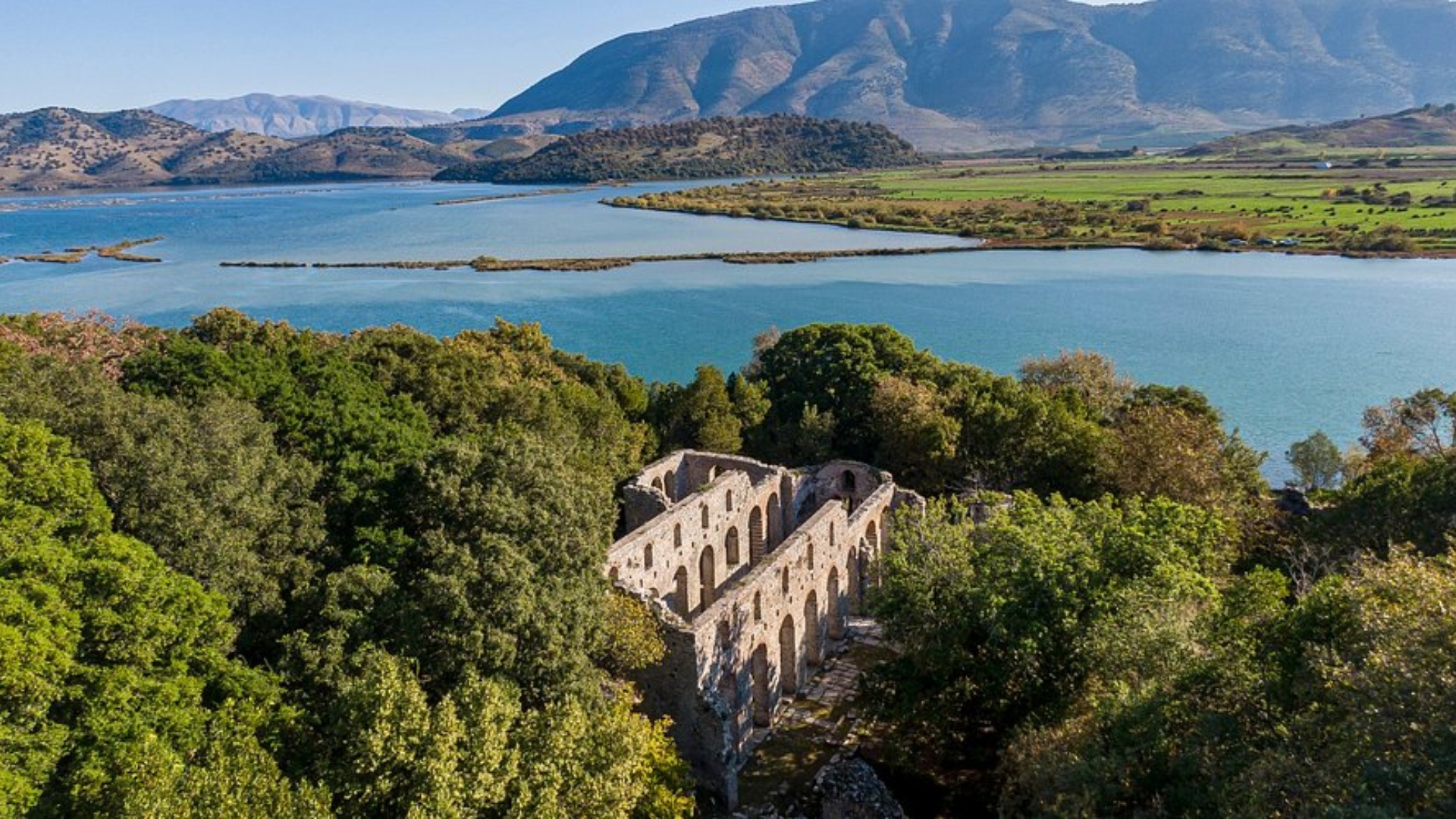 Don’t just keep your eyes on the stones. The natural beauty of Butrint National Park is just as impressive. As you climb towards the Venetian castle at the top of the hill, you get sweeping views of the turquoise lake and the Vivari Channel. Keep an eye out for turtles in the water-filled ruins and the many species of birds that call this park home.
Essential Tips for Visiting Butrint – Make the Most of Your Day
To ensure you have the best possible Butrint day trip, there are a few practical things to keep in mind. First, wear your most comfortable walking shoes. You will be on your feet for a few hours on gravel and stone paths. Bringing a bottle of water is essential, as there aren’t many places to buy drinks once you are deep inside the site.
If you are into photography, the “golden hour” just before sunset is spectacular. The stone ruins glow in the orange light, and the shadows add a lot of drama to your shots. If you are travelling with kids, they will likely enjoy the shaded paths and the “treasure hunt” feel of exploring old towers and gates, but be mindful that strollers can be difficult to push on the gravel sections.
Combine Your Visit with Nearby Attractions
Since visiting Butrint usually takes up half a day, you have plenty of time to explore the surrounding area. The beaches of Ksamil are only a few minutes away and are perfect for a post-walk swim.
You could also drive up to Lëkurësi Castle in Saranda for dinner with a view of the sunset over the Ionian Sea. If you have a full day, the Blue Eye Spring is about an hour’s drive away and makes for a fantastic Butrint Albania itinerary combination.
Final Thoughts: Add Butrint to Your Itinerary
There is something genuinely moving about standing in a place that has been inhabited for thousands of years. Visiting Butrint National Park isn’t just a history lesson; it is a chance to reconnect with the past in a stunning natural setting. Whether you are coming from Saranda or making the journey from further away, you won’t regret spending a day here. Have you visited the Butrint ruins yet? I would love to hear about your experience in the comments below.
Frequently Asked Questions About Visiting Butrint National Park
Is Butrint National Park worth visiting?
Absolutely. It is one of the most significant archaeological sites in the Mediterranean and offers a unique blend of history and nature that you won’t find anywhere else in Albania.
How much are Butrint ticket prices in 2026?
For international tourists, the price is approximately 1,000 LEK. It is always a good idea to have some local cash on hand, although card payments are becoming more common at the entrance.
What is the best time to visit Butrint?
May, June, and September are the best months. You get the best of the weather without the intense heat and the overwhelming summer crowds.
Can you do a day trip from Corfu to Butrint?
Yes, this is very popular. You can take the morning hydrofoil from Corfu to Saranda and then catch a taxi or bus to the park. Just remember to account for the time needed for border control.
Are there toilets and food inside Butrint National Park?
There are toilets and a small café near the entrance and at the museum at the top of the hill. However, there are no shops once you are walking through the main ruins, so bring water with you.
Is the Butrint archaeological site suitable for children?
Yes, children usually enjoy the outdoor nature of the site. However, the paths are not very stroller-friendly, so a baby carrier might be a better option for very young children.