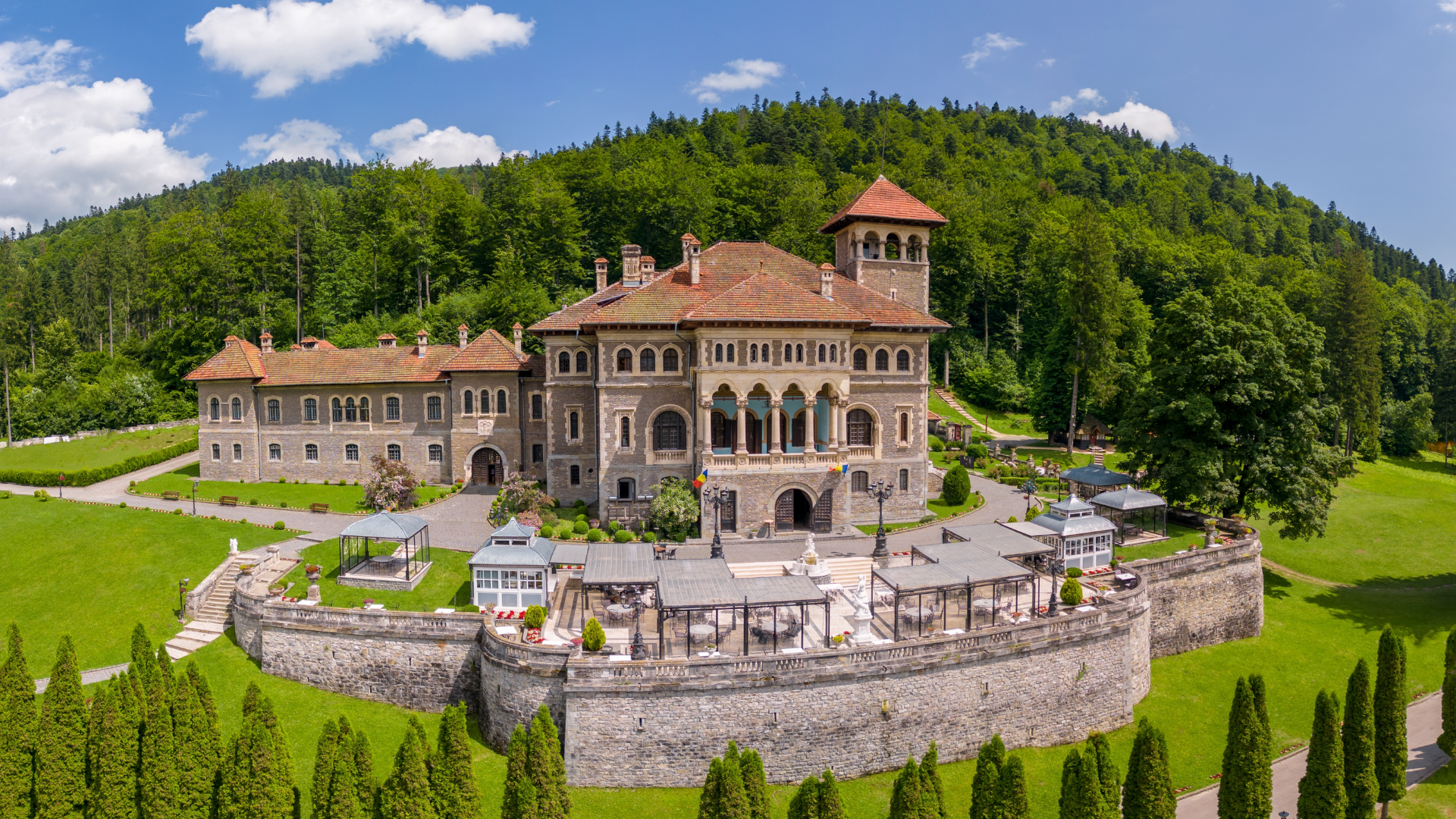
Most people who visit Romania head straight to Bran Castle for the Dracula connection or Peles Castle for its fairy-tale exterior. Both are worth your time. But somewhere between those two crowd favorites, tucked into the Prahova Valley with the Bucegi Mountains rising behind it, sits a castle that quietly outclasses most of what Romania has to offer.
Cantacuzino Castle does not get the attention it deserves. That’s partly a marketing problem and partly a geography one. Busteni is not on every tourist map. But the travelers who do make the trip tend to leave wondering why this place does not show up in more conversations about Romanian royal castles. This article covers everything you need to know before you go.
The History of Cantacuzino Castle & The Cantacuzino Family
Cantacuzino Castle Romania was built in 1911 by Gheorghe Grigore Cantacuzino, one of the most powerful politicians in Romania at the time. He served as Prime Minister twice and accumulated enough wealth to commission a residence that reflected both his social standing and his taste for grand architecture. The Cantacuzino family history in Romania runs deep. They were Byzantine nobles whose lineage stretched back centuries, and by the early 20th century they were among the most influential families in the country.
The castle served as a private family residence during the Romanian monarchy period, hosting notable guests and functioning as a genuine seat of aristocratic life in the Prahova Valley. After World War II, the communist regime took the property. It sat neglected for decades, and the interior suffered for it. Restoration efforts brought the castle back to a functional and presentable state, and today it operates as a museum, event space, and boutique hotel. The recovery has been steady and ongoing.
Architectural Beauty – Neo-Romanian Style Masterpiece
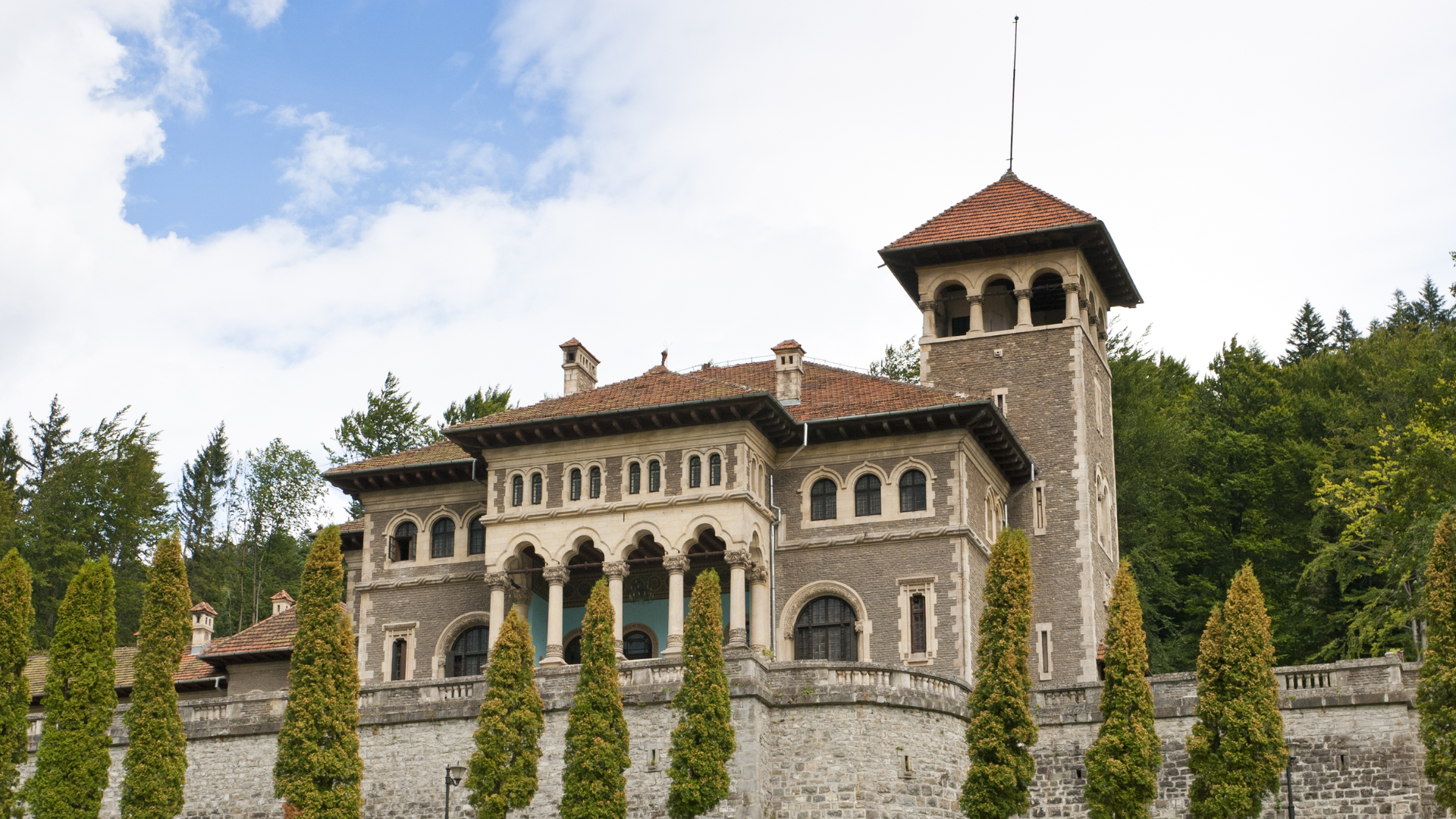 Cantacuzino Castle is one of the most complete examples of Neo-Romanian architecture in the country. The style draws from Byzantine and Brancovan influences, incorporating stone carvings, arched loggias, decorative turrets, and a symmetry that feels deliberate without being rigid.
The exterior reads as an architectural gem in the most literal sense. The stonework is detailed. The proportions are confident. And the mountain views that frame it from virtually every angle add a dramatic context that no architect could have planned better. The Bucegi Mountains sit directly behind the castle, and on a clear day the contrast between the ornate facade and the raw alpine scenery behind it is genuinely striking. This is Neo-Romanian design at its most expressive, and it holds up well against anything else in its category.
Inside Cantacuzino Castle – What to Expect on Your Visit
The interior tour is the main reason to visit, and it delivers more than most people expect going in.
Grand Halls and Salons
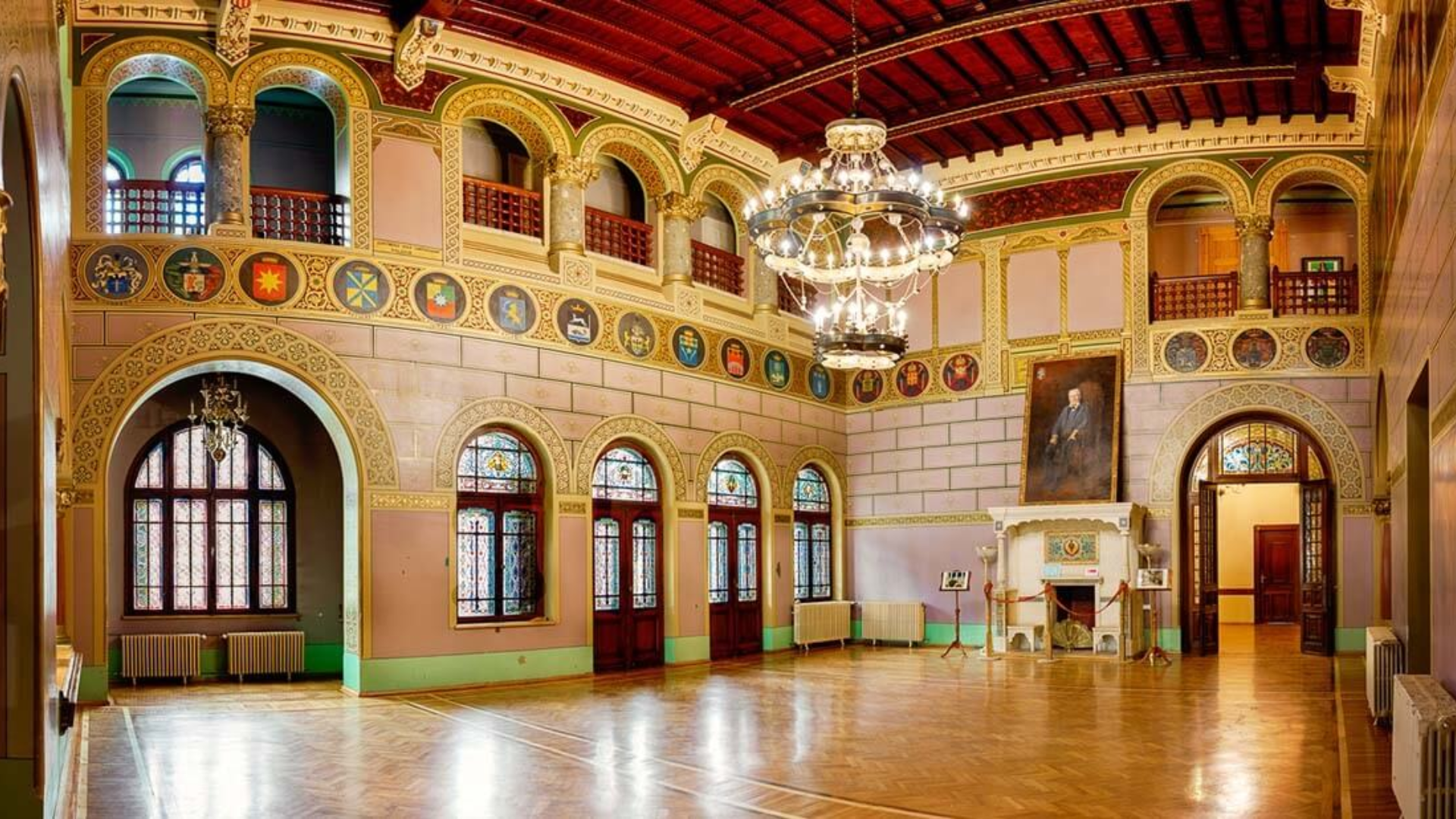 You enter through a reception hall that sets the tone immediately. High ceilings, carved woodwork, and period details throughout. The grand salon is the centerpiece of the main floor. It’s a large, formal space that was clearly designed for entertaining at a serious level. The proportions feel aristocratic without being oppressive. Natural light comes through tall windows that frame the garden on one side and the mountains on the other. Walking through it, you get a clear sense of how the Cantacuzino family actually lived here, not just stored belongings here.
Art Collection and Furniture
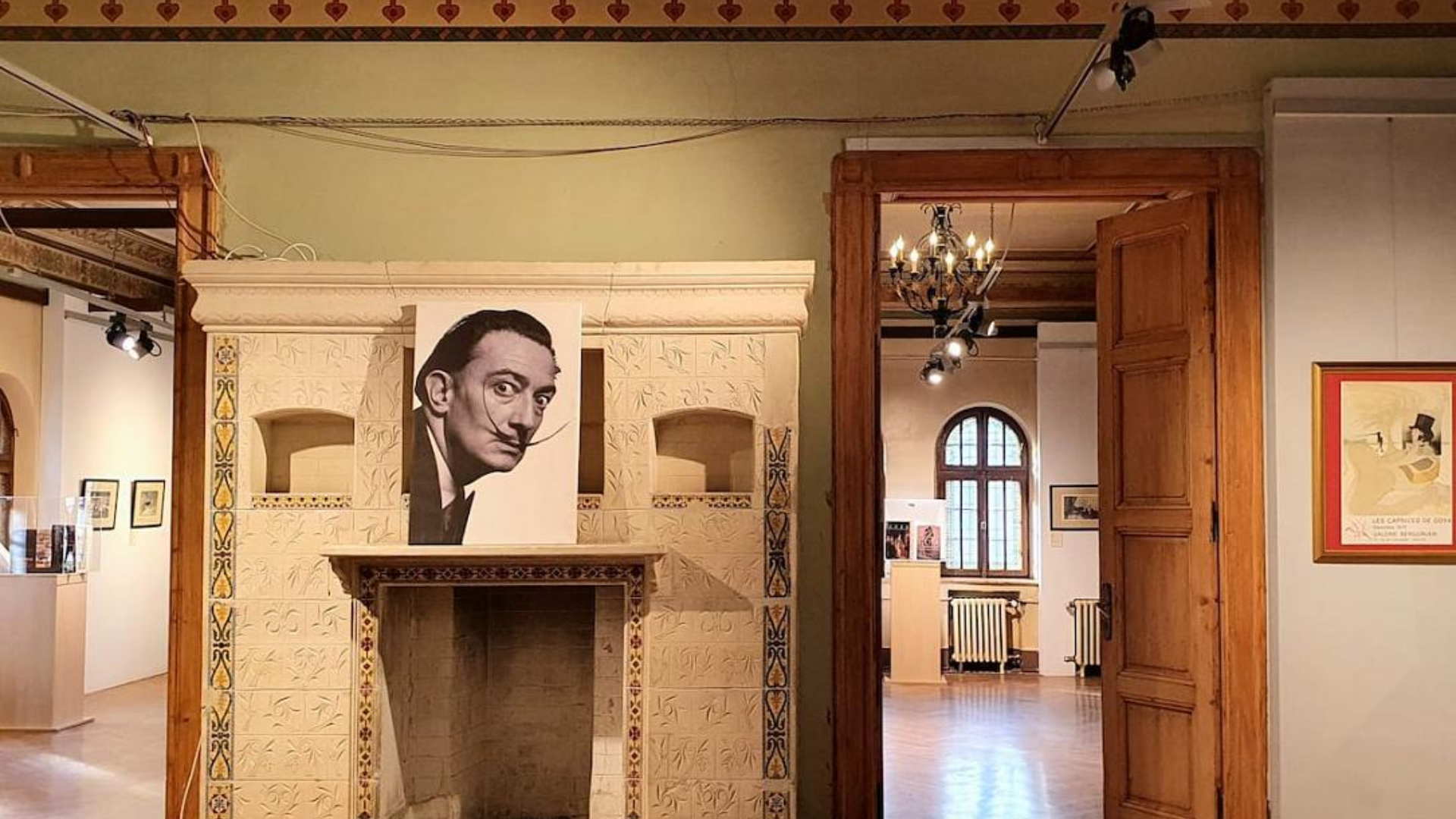 The Cantacuzino Palace holds a notable collection of 19th and early 20th century Romanian and European art. Portraits, landscapes, and decorative objects are placed throughout the rooms in a way that feels like a family collection rather than a curated museum installation. The furniture is period-appropriate and mostly original to the house. Some pieces show wear. That’s not a complaint. It adds to the authenticity of the whole thing. The art collection is not encyclopedic, but it’s cohesive and well worth a slow walk through.
Royal Apartments
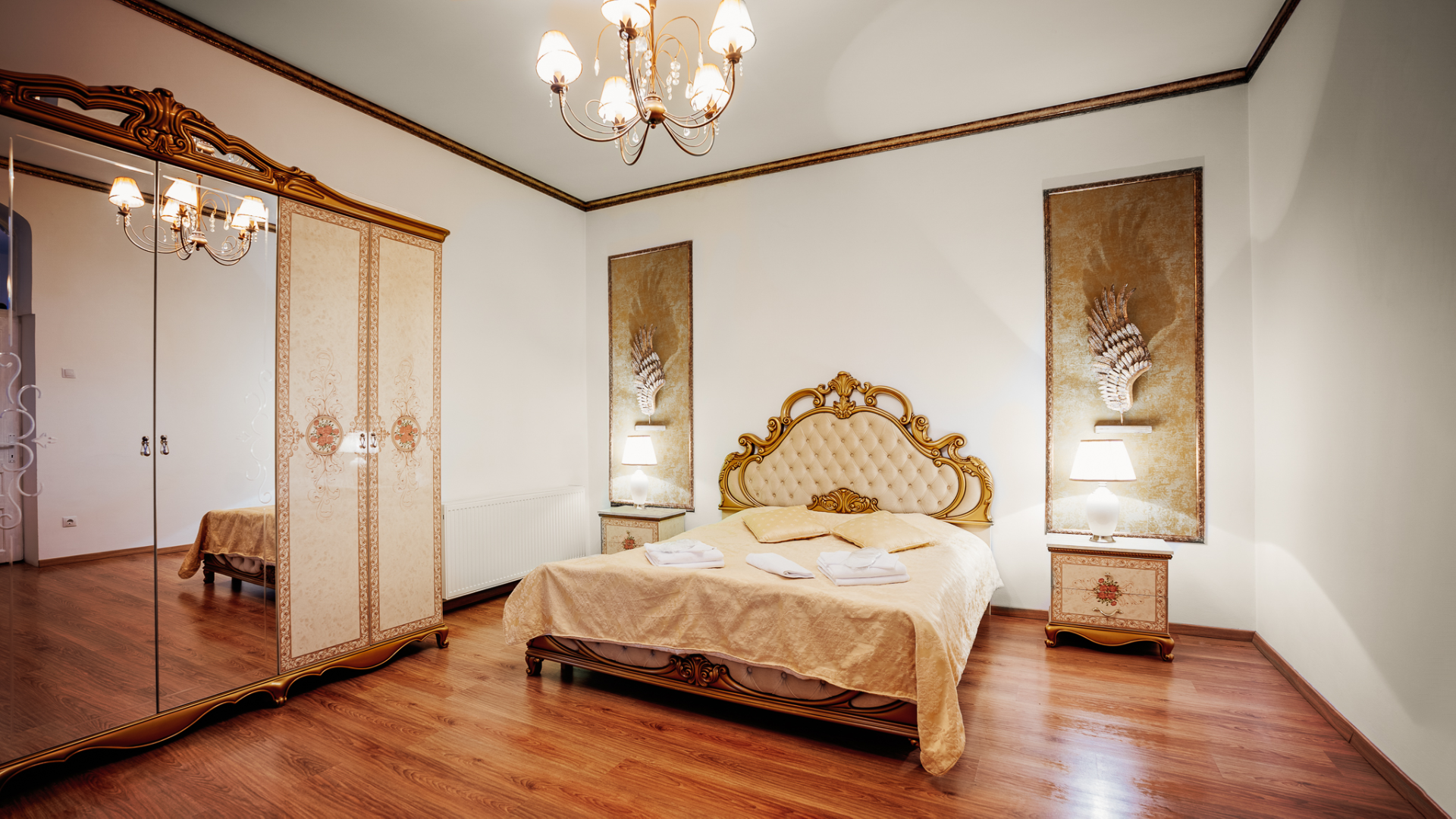 The royal apartments on the upper floor are where the Cantacuzino Palace reveals its most personal side. The private rooms are smaller than the public-facing salons, and that shift in scale tells you something about how the family balanced public life with private life. The bedroom furnishings, personal effects, and decorative details in these rooms carry a different weight than the formal spaces downstairs. The interior Cantacuzino Castle experience is strongest here, where the history feels closest.
Current Use
Cantacuzino Castle currently operates on three tracks at once. Part of the building functions as a museum open to the public for guided and self-guided tours. Another section hosts private events, from corporate gatherings to weddings. A boutique hotel component allows guests to stay overnight in the castle, which is genuinely one of the better travel experiences available in this region of Romania. If a Cantacuzino Castle visit is on your list, booking a room here rather than a nearby hotel adds a layer to the trip that’s hard to replicate elsewhere.
The Gardens and Grounds of Cantacuzino Castle
The grounds deserve more time than most visitors give them. A garden walk around the exterior of the castle reveals details in the stonework that you miss from a distance. The formal gardens are well maintained and laid out in a style consistent with the early 20th century estate tradition. There are several strong photo spots along the garden perimeter where the castle facade lines up cleanly against the mountain backdrop. The surrounding landscape also connects to hiking trails that run through the Bucegi Natural Park, so things to do near Cantacuzino Castle extend well beyond the property itself.
Cantacuzino Castle vs Other Famous Romanian Castles
Here is an honest comparison for anyone working through the Transylvania castles circuit.
Bran Castle gets the most visitors and trades heavily on the Dracula story. The interior is smaller than people expect, the crowds are significant in summer, and the experience can feel more commercial than historical. It’s worth seeing, but it rarely tops anyone’s list after the visit.
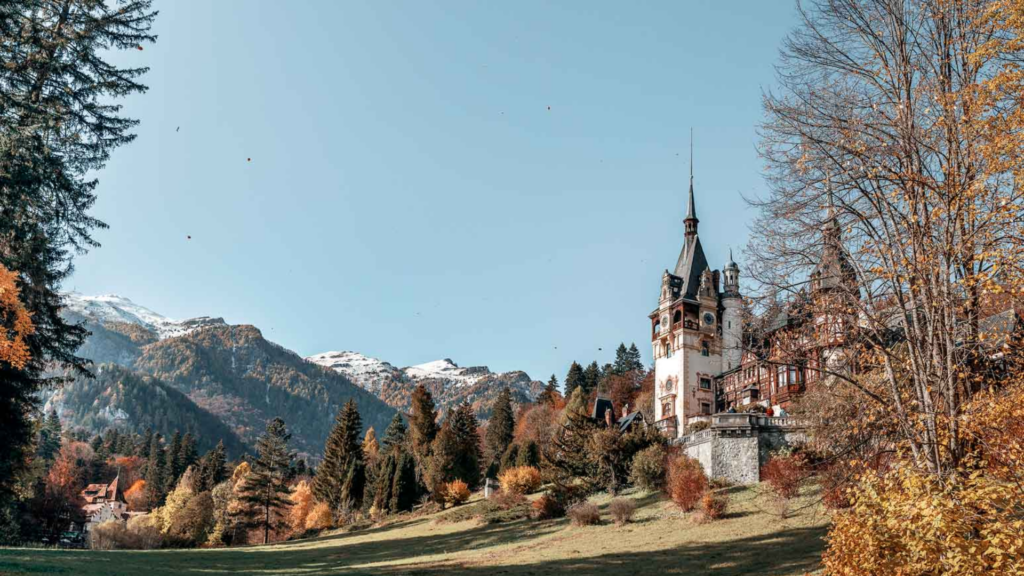
Peles Castle near Sinaia is the strongest competition for Cantacuzino Castle. The interior at Peles is more elaborate, and the royal history there is more thoroughly documented. However, the crowds at Peles can be overwhelming, and the ticket lines are a real issue in peak season.
Corvin Castle in Hunedoara is dramatic and Gothic and unlike anything else in Romania. The atmosphere there is darker and more medieval, which some travelers prefer.
Cantacuzino Castle sits in a different category. It is quieter than all three, more intimate than Peles, and architecturally more refined than Bran. The Prahova Valley castles region as a whole rewards the traveler who is willing to look past the obvious stops. As a Busteni Castle experience, this one is a legitimate day trip destination that earns its place on any serious Romania itinerary.
Conclusion
Cantacuzino Castle is not a backup option. It is a destination that holds its own against anything else Romania has to offer in this category, and it does so with fewer crowds and a more personal atmosphere than its more famous neighbors.
The architecture is exceptional. The interior is well worth the tour. The grounds give you context that the interior alone cannot provide. And the history of the Cantacuzino Palace and the family who built it adds a layer of meaning that makes the whole visit feel grounded in something real.