Travelling has always been one of my favourite things, and over the years I’ve learned that some of the most memorable trips don’t require weeks of planning or massive budgets. Business trips are one thing, and I do enjoy them too, but there’s something particularly special about choosing your own adventure for a quick escape. Europe, with its incredible density of culture, history, and beauty packed into relatively small geography, is absolutely perfect for weekend city breaks Europe style travel.
What makes European weekend breaks so appealing is the sheer accessibility of it all. You can leave London on a Friday morning and be sipping espresso in a Roman piazza by lunchtime. The best European cities for a weekend break aren’t just close – they’re also remarkably easy to navigate, with compact historic centers that you can explore on foot and public transport systems that actually work.
There are so many beautiful places in the world I have already visited, but I keep returning to Europe for short trips because nowhere else offers this combination of convenience, variety, and richness of experience.
Whether you’re after romantic cobblestones, world-class museums, incredible food, or simply a change of scenery, weekend city breaks Europe delivers consistently. Today, I wanted to share with you a few European destinations that I think are perfect for a weekend break, each offering something unique whilst remaining manageable for short trips in Europe when time is precious but wanderlust is strong.
What Makes a City Perfect for a Weekend Break?
Not every city works brilliantly for a quick escape. I’ve learned this through trial and error, arriving in sprawling metropolises that require extensive metro journeys between sights, or destinations where everything interesting sits miles apart.
The best European cities for a weekend break share several key characteristics that make them ideal for stress-free European travel.
Walkability tops the list. Walkable European cities allow you to experience neighborhoods organically, stumbling upon cafés and hidden squares rather than spending half your weekend underground on metros.
When you can stroll from your hotel to major sights, stopping whenever something catches your eye, the whole trip feels more relaxed and immersive. Cities like Florence, Amsterdam, and Prague excel at this – their historic centers are compact enough to cover on foot whilst being packed with enough variety to keep you engaged.
Efficient public transport matters too, particularly for reaching airports or train stations, or venturing to neighborhoods outside the center. The best cities in Europe for short trips have transport systems you can figure out in minutes rather than hours. Clear signage, integrated ticketing, and frequent service remove stress and save precious weekend hours.
Strong food and café culture transforms a good weekend into a great one. Part of weekend travel in Europe involves leisurely meals, afternoon coffees, and discovering local specialties. Cities where café culture thrives – where you can sit for hours over a single drink without feeling rushed – create natural pauses in your itinerary. These moments, sitting at a Parisian bistro or a Lisbon miradouro, often become your favorite memories.
Value for money and travel ease complete the picture. Budget-friendly European cities that don’t require spending £50 on a single meal or £200 per night for basic accommodation make weekend getaway Europe trips more accessible. Similarly, cities with excellent flight connections, reasonable taxi costs from airports, and affordable local transport remove barriers that might otherwise make short trips in Europe feel impractical.
15 Best European Cities for a Weekend Break
1. Paris, France
Best for: Romance, museums, and café culture
Paris is the obvious classic European city break destination – and one that gets better every time we visit. I know it’s predictable to lead with Paris, but there’s a reason this city tops every list of European weekend breaks. The magic isn’t diminished by familiarity; if anything, knowing Paris better allows you to dig deeper beyond the obvious tourist circuit.
The flight from London to Paris is just about an hour, and you can be in the city center within 90 minutes of landing at Charles de Gaulle. This accessibility makes it perfect for a quick trips in Europe when you’ve only got Friday evening through Sunday. Paris rewards the wanderer. Yes, you’ll want to see the Eiffel Tower and probably should visit the Louvre, but the real pleasure comes from aimless strolling through neighborhoods like Le Marais or Saint-Germain-des-Prés.
Walkable neighborhoods mean you can cover significant ground on foot. Start in the Latin Quarter, cross to Île de la Cité to see Notre-Dame (currently under restoration but still impressive externally), wander through the Marais’s narrow streets lined with boutiques and falafel shops, then end up along the Seine as evening falls. The iconic sights cluster conveniently – you can see the Louvre, walk through the Tuileries, up the Champs-Élysées to the Arc de Triomphe, all in a leisurely afternoon.
What makes Paris ideal for weekend city breaks Europe is how it balances must-sees with slower pleasures. Spend an hour at a café watching the world pass. Browse Shakespeare and Company bookshop. Find a wine bar in the 11th arrondissement where locals gather. These unscheduled moments create the perfect weekend in Europe rather than a checkbox exercise. Paris accommodates both the first-timer who wants to see everything and the repeat visitor seeking deeper immersion.
2. Rome, Italy
 Best for: History lovers and food enthusiasts
Rome packs more history into a few square kilometers than seems physically possible. Ancient ruins sit so close together that you can cover major sites in a single morning without rushing. This concentration makes Rome one of the best European cities for a weekend break despite the city feeling quite large overall. You’re never far from something extraordinary, which takes the pressure off trying to see absolutely everything.
What I’ve learned about Rome is that it demands slow wandering rather than efficient touring. You’ll visit the major ancient sites and toss a coin in the famous fountain, sure. But Rome reveals itself best when you’re not following a strict schedule. Getting lost in medieval neighborhoods leads to discoveries that guidebooks miss. You’ll stumble upon churches containing masterpieces, find tiny squares where locals gather, and encounter family-run restaurants where the grandmother still makes pasta by hand every morning.
Evening transforms Rome into something magical. As afternoon fades, locals emerge to occupy outdoor tables, and the city’s tempo shifts into something more social and relaxed. Different squares take on different characters after dark, and sitting in any of them with a drink feels quintessentially Roman. This built-in evening ritual means your days end naturally and pleasurably rather than with exhaustion from cramming in too much.
Food cities in Europe don’t get better than Rome, honestly. Every meal matters here, from morning coffee and pastry to late-night gelato. The cuisine balances simplicity with perfection – dishes with just a few ingredients executed so brilliantly you understand why Italian food conquered the world. For a weekend getaway Europe that nourishes both mind and stomach, Rome delivers every single time.
3. Barcelona, Spain
Best for: Culture with beach time
Barcelona offers something rare among European weekend breaks – the ability to combine urban exploration with actual beach relaxation. The Mediterranean laps against the city’s edge, meaning you can visit architectural marvels in the morning and be swimming by afternoon. This versatility makes Barcelona work for different moods and weather conditions, which is perfect when you’re only visiting for a short time.
The architecture here is unlike anywhere else I’ve been. You’ll see those famous organic buildings with undulating facades that look like they’re melting or growing rather than constructed. But Barcelona extends well beyond its most famous architect. The medieval quarter’s narrow lanes feel genuinely old, whilst the 19th-century grid district showcases elegant boulevards lined with more architectural gems. Even the hilltop areas offer museums and gardens worth the climb.
Markets provide another Barcelona highlight that shouldn’t be missed. The main market explodes with colors and smells – fresh seafood, cured meats, tropical fruits, vendors offering samples. Smaller neighborhood markets give you more local atmosphere if the famous one feels too touristy. Wandering these markets and sampling offerings captures Barcelona’s food culture without requiring expensive restaurant reservations.
The city navigation is genuinely easy, which makes Barcelona ideal for weekend city breaks Europe. The metro is straightforward, but honestly, you’ll walk most places anyway. The relaxed pace suits weekend travel perfectly too. Long lunches, late dinners, evening strolls along the waterfront – you’re encouraged to slow down and savor rather than tick off a checklist. That Mediterranean attitude toward time makes Barcelona feel like a proper escape even if you’re only there for two nights.
4. Lisbon, Portugal
Best for: Scenic views and laid-back charm
I would say that a 2-night city break in Lisbon would give you a good taste of what else you could visit next time. The city sprawls across seven hills, creating constantly changing perspectives and viewpoints (miradouros) that reward climbing steep streets.
Hills, trams, and riverfront walks define Lisbon’s geography. The iconic yellow tram 28 rattles through narrow streets in Alfama and Graça, offering a scenic if crowded journey through historic neighborhoods. It’s a city that hasn’t been overly polished, retaining working-class character alongside tourist developments.
Lisbon represents an affordable weekend getaway Europe option without compromising on experience. Accommodation, meals, and attractions cost noticeably less than in Western European capitals whilst delivering equal quality. A superb dinner with wine might cost £25 per person, and even central hotels remain relatively reasonable. This value makes Lisbon accessible for travelers on tighter budgets seeking cheap weekend breaks Europe.
5. Amsterdam, Netherlands
Best for: Art, canals, and cycling
Amsterdam’s compact size makes it perfect for short trips in Europe. The canal ring that defines central Amsterdam is remarkably small – you can walk its width in about 30 minutes. This means major sights cluster conveniently, letting you cover the Rijksmuseum, Anne Frank House, and various canal-side neighborhoods easily over a weekend.
Strong cultural city breaks Europe appeal comes from Amsterdam’s museums. The Rijksmuseum houses Rembrandt’s Night Watch alongside incredible Dutch Golden Age collections. The Van Gogh Museum contains the world’s largest Van Gogh collection, showing his evolution from dark Dutch paintings to vibrant French works.
Cycling defines Amsterdam life, and joining in transforms the experience. Bike rental is cheap and ubiquitous, and cycling like a local – confidently, quickly, without a helmet – lets you cover more ground whilst feeling less touristy. That said, walking works perfectly too. The canal belt rewards aimless wandering, discovering houseboats, hidden courtyards, and bridges that all somehow look different despite following similar architectural patterns.
Amsterdam’s café culture embraces both coffee houses (for actual coffee) and the other kind of café. For a city break Europe that balances culture with simply enjoying a beautiful city, Amsterdam hits the mark consistently.
6. Prague, Czech Republic
Best for: Fairytale streets and history
Prague ranks as one of the best cities in Europe for short trips for good reason. The city looks almost impossibly beautiful, with Gothic spires, baroque buildings, and the Charles Bridge creating scenes that seem designed for postcards. What’s remarkable is that this beauty comes with budget-friendly European cities pricing, making Prague accessible for weekend travel in Europe without overspending.
The Old Town Square serves as Prague’s heart, surrounded by pastel-colored buildings and dominated by the Astronomical Clock (overhyped but still worth seeing strike the hour). From here, cobblestone streets radiate outward, each revealing layers of history. Walking to Prague Castle via the Lesser Quarter showcases the city’s architectural evolution, from medieval foundations through baroque additions to art nouveau details.
Czech beer culture elevates Prague beyond pure sightseeing. Traditional beer halls serve excellent pilsner for remarkably little money – we’re talking £2-3 per pint of quality beer. Pair that with hearty Czech food like goulash or svíčková, and you’ve got a satisfying, affordable meal. The charming old towns Europe experience that Prague delivers, combined with value and accessibility, makes it enduringly popular for European weekend breaks.
7. Budapest, Hungary
Best for: Thermal baths and architecture
Budapest offers great value for money without sacrificing beauty or culture, making it ideal for relaxed weekend travel Europe. The city straddles the Danube, with historic Buda rising on hills to the west and flatter, more modern Pest spreading east. This division creates natural exploration zones whilst maintaining cohesion.
Thermal baths define Budapest in ways that set it apart from other best European cities for a weekend break. Széchenyi Baths, with outdoor pools steaming in winter cold, offer a quintessentially Budapest experience. Spending a few hours soaking in thermal waters, perhaps with a floating chessboard, creates that slower pace that makes weekend getaway Europe trips so restorative.
Architecture ranges from medieval castle districts to Hungarian art nouveau to Communist-era buildings. For weekend city breaks Europe that feel both historic and vibrant, Budapest balances beautifully.
8. Vienna, Austria
Best for: Elegance and classical culture
Vienna delivers a luxury weekend breaks Europe feel even on moderate budgets. The city exudes elegance through its imperial architecture, classical music heritage, and legendary coffeehouse culture. Everything feels refined without being stuffy.
Vienna’s compact first district contains most major sights within walking distance. St. Stephen’s Cathedral anchors the center, whilst the Ringstrasse boulevard encircles the old town, lined with impressive buildings from Vienna’s 19th-century imperial heyday. Opera, classical concerts, and Christmas markets (depending on season) add cultural depth. Vienna proves that scenic European cities can be sophisticated without feeling intimidating or expensive.
9. Florence, Italy
Best for: Art and Renaissance beauty
Florence’s compact historic center makes it one of the most walkable European cities. You can cover the Duomo, Uffizi Gallery, Ponte Vecchio, and Piazzale Michelangelo overlook all in a weekend whilst never feeling rushed. This concentration of Renaissance art and architecture, packed into medieval streets, creates an intensity of beauty that’s almost overwhelming.
The Uffizi Gallery requires planning – book tickets in advance or face massive queues. But standing before Botticelli’s Birth of Venus or Leonardo’s Annunciation justifies any hassle. The Accademia houses Michelangelo’s David, and whilst crowds cluster around this masterpiece, the surrounding galleries display fascinating works with far fewer people. These artistic treasures make Florence essential for cultural city breaks Europe.
Beyond museums, Florence rewards wandering. Cross the Arno to the Oltrarno district, where artisan workshops continue centuries-old crafts. Climb to San Miniato al Monte for sunset views across the city. Get lost in the leather market near San Lorenzo. Stop for aperitivo at a wine bar, getting multiple small plates with your drink. These moments between major sights often prove most memorable.
Florence manages to feel both like a living city and an open-air museum, making it ideal for short trips in Europe when you want intensive culture without giving up everyday pleasures.
10. Copenhagen, Denmark
Best for: Design, food, and cycling
Copenhagen exemplifies walkable European cities that are also brilliantly cycle-friendly. The Danish capital feels clean, organized, and easy to navigate, removing any stress from weekend city breaks Europe. It’s expensive, yes, but the quality of experience justifies the cost, and savvy choices keep things manageable.
Food defines modern Copenhagen as much as design. Budget travelers can still eat well here; bakeries sell incredible pastries, and hot dog stands are a Danish institution.
Tivoli Gardens, the world’s second-oldest amusement park, adds unexpected charm. The park combines vintage rides with beautifully maintained gardens and evening illuminations, creating something simultaneously nostalgic and current. Visiting Christiania, the semi-autonomous “freetown,” provides counterpoint to Copenhagen’s polish. The city rewards both planned itineraries and spontaneous exploration, making it versatile for Europe weekend trips.
11. Kraków, Poland
 Best for: History with affordability
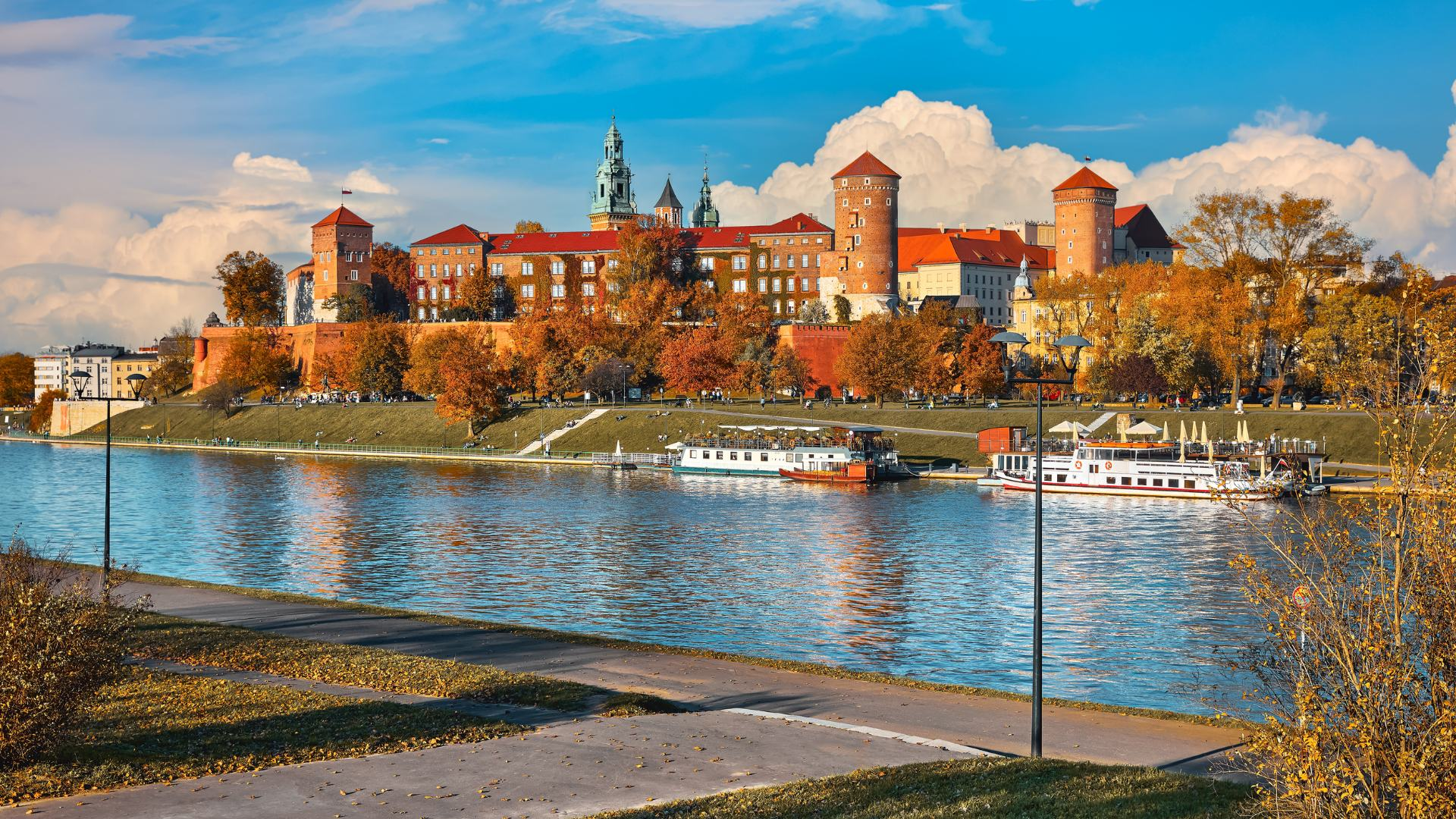
Kraków delivers that charming old towns Europe experience whilst remaining remarkably affordable. The main square (Rynek Główny), Europe’s largest medieval square, creates a spectacular setting for cafés and restaurants where meals cost a fraction of Western European prices. This combination of beauty and value makes Kraków increasingly popular for cheap weekend breaks Europe.
Strong cultural depth in a short stay comes from Kraków’s layered history. The old town’s walkability means you’re constantly discovering something – the Cloth Hall dominating the main square, St. Mary’s Basilica with its hourly trumpet call, narrow lanes hiding cellar bars and traditional restaurants. Kraków maintained its historic architecture through both World Wars and Communist rule, so you’re seeing authentic medieval and Renaissance buildings rather than reconstructions.
Day trips extend Kraków’s appeal. Wieliczka Salt Mine, with its underground chapels carved entirely from salt, makes a fascinating half-day excursion. The Auschwitz-Birkenau memorial site, whilst harrowing, provides essential historical understanding. Kraków itself offers enough for a fulfilling Europe weekend itinerary whilst serving as base for deeper regional exploration.
12. Edinburgh, Scotland
Best for: Dramatic scenery and storytelling
Edinburgh combines urban culture with natural drama in ways few cities manage. Arthur’s Seat, an extinct volcano, rises right in the city center, offering hiking and panoramic views after 45 minutes’ climb. The Royal Mile descends from Edinburgh Castle to Holyrood Palace, flanked by medieval closes (alleyways) that hide atmospheric pubs and historic sites. This blend makes Edinburgh ideal for a Europe weekend itinerary that wants variety.
Historic streets carry layers of stories. Edinburgh’s literary heritage runs deep – Robert Louis Stevenson, Sir Walter Scott, J.K. Rowling all drew inspiration here. The city’s dark history (body snatchers, underground vaults, witch trials) feeds countless ghost tours and spooky tales. But Edinburgh isn’t trapped in the past. Contemporary galleries, innovative restaurants, and the massive Edinburgh Festival in August showcase vibrant modern culture.
The New Town, despite its name being 250 years old, provides elegant Georgian contrast to the Old Town’s medieval character. Princes Street Gardens separate the two, creating green space that enhances both. Calton Hill offers another viewpoint, this time with neoclassical monuments that earned Edinburgh its “Athens of the North” nickname.
Scottish food and drink culture adds flavor to the experience. Traditional pubs serve haggis (better than it sounds) alongside craft beers and extensive whisky selections. Afternoon tea at The Balmoral or other grand hotels provides an elegant break from sightseeing. Edinburgh rewards the traveler seeking historic European cities with personality and natural beauty beyond typical urban experiences.
13. Dublin, Ireland
Best for: Literary heritage and pub culture
Dublin punches well above its size in terms of cultural contributions. James Joyce, Samuel Beckett, Oscar Wilde, W.B. Yeats – the literary giants associated with Dublin create a heritage that permeates the city. Trinity College’s Old Library, housing the Book of Kells, provides tangible connection to Ireland’s manuscript traditions. These literary associations make Dublin appealing for cultural city breaks Europe focused on storytelling and writing.
Temple Bar, whilst tourist-heavy, captures Dublin’s pub culture in concentrated form. But venture beyond to neighborhood pubs like O’Donoghue’s or The Cobblestone, where traditional music sessions occur spontaneously and locals actually outnumber visitors. Irish pub culture isn’t just about drinking – it’s about conversation, music, and community. Experiencing an authentic session, where musicians gather to play without performance pretense, provides genuine cultural immersion.
Georgian Dublin showcases elegant 18th-century town planning. Merrion Square and Fitzwilliam Square, with their colorful doors and central parks, create picturesque residential areas that reward wandering. The Guinness Storehouse, though touristy, offers surprisingly engaging brewery history culminating in panoramic city views from the Gravity Bar. St. Patrick’s Cathedral and Christ Church Cathedral represent medieval spiritual centers still functioning today.
Dublin’s compact size means you can walk most places, making it suitable for easy European city breaks. The city feels manageable and friendly, with none of the overwhelming scale that can make short trips in Europe feel rushed. Irish friendliness isn’t just stereotype – conversations start easily, and locals genuinely seem pleased to share their city with visitors.
14. Istanbul, Turkey
Best for: East meets West drama
Istanbul straddles two continents, creating a city unlike anywhere else among the best European cities for a weekend break. The Bosphorus Strait separates European and Asian sides, and ferries crossing between them provide one of the world’s great commutes. This geographic uniqueness matches cultural complexity – Byzantine churches, Ottoman mosques, and contemporary Turkish life layer together creating fascinating depth.
Hagia Sophia represents this layering literally, having served as Byzantine cathedral, Ottoman mosque, secular museum, and now mosque again. The Blue Mosque’s cascade of domes and minarets creates Istanbul’s iconic silhouette. Topkapi Palace sprawls above the Bosphorus, revealing Ottoman imperial life through its courtyards, harems, and treasury. These monuments cluster in the Sultanahmet district, walkable from each other despite their monumental scale.
The Grand Bazaar and Spice Bazaar offer sensory overload in the best way. Wandering the covered streets, bargaining for carpets or ceramics, smelling spices and Turkish delight, creates immersion in traditions stretching back centuries. Modern Istanbul thrives beyond tourist zones too. Beyoğlu district, particularly Istiklal Avenue, showcases contemporary Turkish life with restaurants, shops, and nightlife. Karaköy’s waterfront has gentrified recently, offering trendy cafés alongside traditional fish sandwich boats.
Turkish food excellence makes Istanbul essential for food cities in Europe (geographically debatable, culturally relevant). Breakfast spreads with endless small plates, kebabs that shame Western imitations, Turkish coffee and baklava that set standards – eating becomes a primary activity. Istanbul requires energy but rewards it with experiences impossible to replicate elsewhere, making it unforgettable for European weekend breaks.
15. Helsinki, Finland
Best for: Nordic design and sea-side calm
Helsinki represents the quieter, more contemplative end of European weekend breaks. Finland’s capital spreads across peninsulas and islands, creating a maritime character where the Baltic Sea feels constantly present. The compact city center clusters around Senate Square, where the white Lutheran Cathedral creates striking minimalist beauty against Nordic skies.
Design and architecture define Helsinki’s appeal. The Design District showcases Finnish design legends like Marimekko and Iittala alongside contemporary studios. Alvar Aalto’s architecture appears throughout the city, from Finlandia Hall to residential buildings demonstrating his organic modernism. The rock-hewn Temppeliaukio Church, carved directly into granite, provides a space that’s simultaneously ancient and contemporary in feel.
Finnish sauna culture deserves participation. Public saunas like Löyly, with contemporary design and waterfront location, welcome visitors to experience this essential Finnish ritual. Alternating between hot sauna and cold Baltic plunges creates invigoration that’s both physical and mental. This wellness aspect makes Helsinki ideal for stress-free European travel focused on relaxation as much as sightseeing.
Helsinki works brilliantly for off-season Europe travel. Summer brings endless daylight and outdoor festivals, but winter’s darkness and cold create intimate atmosphere. Christmas markets and lights transform the city, whilst locals embrace hygge-like coziness in cafés and restaurants. The city never feels crowded, public transport works flawlessly, and nature remains accessible – you can reach forest or seaside within minutes. For travelers seeking under-the-radar European cities that offer quality over quantity, Helsinki delivers quietly excellent experiences.
Best European Weekend Breaks by Travel Style
Romantic European Cities
Paris obviously leads romantic destinations with its reputation for love and beauty. But don’t overlook Italian cities with their gondolas and sunset views, or Prague’s evening castle illuminations. Lisbon’s hilltop viewpoints create romantic settings without Paris’s crowds. The key is choosing cities where wandering and slower pace are encouraged, where you’ll find quiet corners and atmospheric spaces between major sights for those intimate moments.
Budget-Friendly European Cities
Eastern European capitals generally offer better value than Western ones while delivering comparable experiences. These budget-friendly European cities let you enjoy excellent meals, decent accommodation, and all major attractions for half what you’d spend in more expensive destinations. Lisbon proves that affordable Western options exist too. The value doesn’t mean compromising quality – you’re just spending less for similar or better experiences.
Food Cities in Europe
Italian capitals lead for Mediterranean flavors with their perfect pasta and pizza traditions. Spanish cities offer incredible tapas culture and fresh seafood. Copenhagen represents Nordic innovation pushing culinary boundaries. The best foodie weekend breaks Europe combines established culinary traditions with contemporary innovation, letting you eat everything from street food to high-end dining within the same weekend.
Hidden Gem Cities Europe
Some smaller capitals and secondary cities offer outstanding weekend city breaks Europe experiences with fewer tourists. These places provide all the beauty and culture of more famous destinations whilst maintaining authentic local life and better value. They’re perfect for travelers who’ve already done the major cities or who prefer discovering places before they become completely overrun with visitors.
How to Plan the Perfect Weekend City Break in Europe
- Planning short trips in Europe requires balancing efficiency with flexibility. Book flights or trains early for better prices – budget airlines often offer return flights under £50 if booked months ahead. Weekend flights cost more, so occasionally leaving Thursday evening or returning Monday morning saves significantly whilst adding valuable travel time to your trip.
- Where to stay matters enormously for maximizing limited time. Choose accommodation within walking distance of the historic center or with excellent public transport connections. Boutique hotels in restored historic buildings often cost less than chain hotels whilst offering more character and local flavor. Alternative accommodations work well if you want apartment space and kitchen facilities, particularly useful for couples or small groups splitting costs.
- Packing light transforms weekend travel in Europe completely. A carry-on bag eliminates baggage wait times and check-in queues, potentially saving an hour each direction. This matters significantly on two-day trips where every hour counts. Pack versatile layers, comfortable walking shoes, and minimal toiletries. You’ll survive wearing the same jeans twice, and the freedom of traveling light outweighs any fashion concerns.
- Making the most of limited time requires realistic planning rather than ambitious overplanning. Choose one or two must-see attractions, then leave substantial space for wandering and spontaneous discoveries. The perfect weekend in Europe rarely involves racing between twenty sights trying to see everything. Instead, experience a few things properly whilst absorbing the city’s atmosphere. This rhythm prevents exhaustion whilst creating fuller memories than checking endless boxes would ever achieve.
Best Time of Year for European Weekend Breaks
- Spring and autumn offer distinct advantages including milder weather, fewer crowds, and often better prices. Late spring and early autumn provide excellent conditions for weekend city breaks Europe across most destinations. You’ll experience pleasant temperatures for walking, shorter queues at major attractions, and hotels with better availability. The light during shoulder seasons creates particularly beautiful conditions too, something photographers especially appreciate.
- Off-season Europe travel benefits extend well beyond savings. Winter months bring cheaper flights and accommodation, though weather can certainly be challenging. However, visiting cities in winter reveals different character that summer visitors never see. Festive markets transform squares, locals reclaim their cities from tourist masses, and indoor attractions feel more appealing when it’s cold outside. Some cities embrace winter beautifully with festive atmosphere extending beyond just December.
- Avoiding crowds without missing atmosphere requires some timing awareness. Peak holiday periods bring maximum crowds and prices, whilst visiting just outside these windows often provides ideal conditions. Understanding these patterns helps secure better value and more authentic experiences during your Europe weekend trips. Sometimes traveling slightly off-peak means the difference between fighting crowds and having space to actually enjoy what you came to see.
Final Thoughts – Choosing Your Perfect Weekend City
The best European cities for a weekend break ultimately depend on what you’re personally seeking from your escape. First-timers might prioritize major capitals where famous sights justify the hype and provide that quintessential European experience. Repeat European travelers often prefer lesser-known places that offer discovery without the crowds. Budget determines some choices obviously, though even expensive cities become manageable with smart planning and cheap weekend breaks Europe options exist throughout the continent.
Consider matching city choice to your travel mood rather than just ticking off famous names. Feeling romantic? Choose cities known for atmosphere and beauty.
Need cultural immersion? Pick somewhere with world-class museums and historic depth. Want relaxation? Select destinations with slower pace and wellness culture. Seeking adventure? Go somewhere that pushes slightly beyond typical European boundaries. The variety available means you can return repeatedly for weekend getaway Europe trips and never repeat experiences or feel like you’re seeing the same thing.
The beauty of European weekend breaks is how accessible they’ve become over recent decades. Low-cost airlines, excellent train networks, and compact city centers make even ambitious two-day itinerary Europe plans genuinely realistic. You don’t need weeks of vacation time or huge budgets to experience some of the world’s greatest cities anymore. Just a Friday afternoon flight, comfortable shoes, and openness to whatever unfolds between landing and departure.