Travelling has become more expensive in recent years, as with everything. This was only supposed to be temporary following the COVID pandemic, as the industry got back on its feet. But, as with most things, the prices don’t ever seem to come back down. Although, I guess we’re all to blame for creating rising demand and paying the prices that are put in front of us. But we all love to travel so I guess it is what it is. Nonetheless, it has left many people asking how to save money for a holiday.
Thankfully, there are plenty of things we can do to bring down costs and keep ourselves travelling without worrying too much about money. As the world gets more expensive, there are more and more websites popping up to help you find travel deals, free walking tours are becoming available in more cities, and there are plenty of new ways to connect directly with locals through the sharing economy—bypassing traditional travel systems and their commissions altogether.
So, I want to share some practical tips to help you make travel more affordable this year!
1. Shift Your Mindset
On the surface, this might not sound like a budgeting tip, but it’s probably the most important when it comes to saving for travel. How you think about things has the biggest impact on your decisions and behaviour. So, you need to keep telling yourself that the travelling you want to do is within reach, remind yourself that you want to travel more, and make the small, necessary changes to make it happen. You need to prioritise your desire to travel more, and make sure your decisions are aiming towards this desire.
Unfortunately, no matter how cheap we can make travel, it still costs money. Finance is also very much a mental game more than anything. If you can do something every day that nudges you closer to your goal, you’ll be surprised how quickly you can gain momentum. And this is how you can save money for a holiday in the most efficient way.
2. Cut Unnecessary Expenses
Once you’ve got yourself into the mindset of how to save money for a holiday, and aiming your decisions this way, you need to do a financial audit. I did this, and it’s honestly mind blowing how much money I was wasting.
For example –
Costa 3 times a week – £50 per month
Tesco meal deal twice a week – £30 per month
Takeaway once a week – £60 per month
Night out once a month – £80 per month
Total – £220 per month
Of course, everyone is different but this is just an example of how quickly spending can add up. There are also subscriptions, smoking, fast fashion, gambling etc.
You may not think £220 per month is much, but this could be nearly £3000 per year for a couple of big holidays, or 6 short breaks a year. If you have no spare money to travel with, saving £220 per month is massive.
Begin by tracking every expense for a month—groceries, rent, meals out, subscriptions, everything. You can’t save money for travel if you don’t know where your money is going.
3. Create a Savings Plan
So, we’ve changed our mindset, we’ve done a financial audit and found how we can manage our money better and, as you’re here, I’m assuming you’re not a billionaire. So, saving money is essential. The good news is that it’s going to feel a lot easier once you know what you’re spending. Small savings add up over time and if you currently don’t have any, it will feel amazing seeing the number grow.
Find a savings account that will pay you a decent interest rate but also allows you to take out when you want. Make this a dedicated travel savings account and set up a standing order to automatically transfer the money. As you have completed a financial audit and seen how much spending you can cut back on, you can then decide how much to save each month to put towards your holiday.
4. Collect Points and Miles
Collecting points and miles is seen as a more advanced way to save money for travel, but it really isn’t once you know how. Simply put, it’s just gaining extra benefits for money you are already spending. By using reward credit cards and simple strategies, you can rack up hundreds of thousands of points which can then be used to pay for flights and hotels.
I have only recently got into the credit card game, but I have accumulated over 300,000 points by implementing simple strategies and everyday spending that I was doing already. For context, a Virgin Atlantic business class flight from London to New York is around £5,000 one way. Or, 29,000 points and £500 in taxes. You can also use points for economy flights, sometimes meaning you only pay 10-20% of the cash value of the flight.
If you’re new to this, I recommend this beginners guide to credit card points and miles. If you are already ready to take the next step then make sure you find the best travel rewards credit card for you.
5. Finding the cheapest flights
From my experience, most people say flights are too expensive. The brutal truth? People don’t know how to look for flights effectively.
I rarely pay more than £100 for a return flight around Europe (from the UK). The cheapest I remember was £32 return to Stockholm. This is one of the main factors of how I save money on a holiday.
The biggest thing to focus on is flexibility. Try to avoid setting your dates of travel before looking into flight prices. This is a guaranteed way to overpay. Instead, find the cheapest dates and then book your holiday around that. An even better approach is to be open minded about where to travel. Skyscanner and google flights have ‘search everywhere’ functions so you can literally just find the cheapest flights from a certain airport. This is also a great approach if you do have set dates.
If you can be flexible, one of the best ways you can find cheap flights without stressing is with Jack’s Flight Club. They do the leg work for you and find the best flight prices and send them straight to your inbox. I have used their emails to book trips so many times and you can also get a £1 trial to their premium membership.
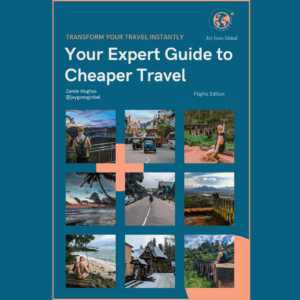
You can also try my expert guide to cheaper flights and get an extra 25% off with the discount code – BLOG.
6. Choose Budget Accommodation
Other than flights, I would say accommodation is usually the biggest expense when you save money for a holiday. I would also say it’s the hardest area to save money on whilst travelling, but that’s not to say it isn’t possible. Equally, it is very dependant on the quality of accommodation and experience you want.
Consider hostels, Couchsurfing, university dorms during breaks, camping, or Airbnb. Even making some small, simple changes like booking early or staying just outside major tourist hubs can save you a bundle. This can make a huge difference when you want to save money on travel.
One thing I have found useful is booking my accommodation very late through airbnb. If it is only a few days until the dates you want and someone has an apartment available, just message asking for discount. They probably want the money and usually won’t mind offering 20-25% off the price.
You can also read more tips and tricks on finding cheap accommodation.

7. Embrace the Sharing Economy
If you are unfamiliar with sharing economy platforms, they have truly revolutionised how budget travellers can operate. They make it easier to save money, meet locals, and experience life beyond the tourist trail. Whether it be accommodation, transportation or food and drinks, these apps can save you so much money whilst providing incredible opportunities to meet new people and have unique experiences. This can be a huge help with how to save money for a holiday, especially if you are going solo.
Some of the best out there are:
Trusted Housesitters: House-sit while homeowners are away.
EatWith: Share meals cooked by locals—like Airbnb for food.
BlaBlaCar: Rideshare with verified locals.
8. Seek Out Free Experiences
The internet is full of free travel resources—blogs, forums, and guides—that show you how to explore on a budget. Just search “free things to do in [destination]” and you’ll find plenty.
Don’t hesitate to pop into hostels (even if you’re not staying) and ask the staff or guests for cheap activity tips. Local tourist offices are also goldmines for free or discounted experiences, events, and transport deals.
If you enjoy tours and learning about the city you have headed to, free walking tours are a great way to explore with the help of a local. Although they are ‘free’, they work on tips so you are not expected to give anything but usually a small tip is given. This also helps give back to the local community.
9. Use Public Transport
Using public transport is how I save a lot of money when i travel. You really need to avoid taxis and rideshares unless you can share the ride. Public transportation is almost always cheaper and gives you a taste of local life. Airport taxis are especially bad as they are usually 3 times as expensive as a normal taxi, and a normal taxi is often at least five times as expensive as a bus or train. You also can’t get scammed by a bus or train like you can with a taxi driver.
I understand it can be daunting using public transport in other countries. So I simply use Google maps, it tells you where to go, bus numbers, train times, literally everything you need to know.
If you do decide to stick with taxis, make sure to always use a ride-sharing app like Uber. When I was in Sri Lanka, the Grab app was telling me one price whilst the roadside taxis were telling me 4 times as much.
For intercity travel, Omio.com is a great resource.

10. Visit Local Tourism Offices
Local tourist offices exist to help traveller’s. They often have exclusive discounts, event info, and tips for budget-friendly food and transport.
Don’t overlook them—they’re one of the best free resources on the ground.
11. Eat Smart
Food is another major expense, but there are plenty of ways to eat cheaply:
Cook your own meals by shopping at grocery stores or local markets
Use deal-finding apps like Yelp, Seamless, LaFourchette, or TasteCard
Walk away from tourist areas—locals tend to eat in these spots, where food is tastier and cheaper
Tourist spots often prioritize volume over quality since visitors rarely return. Local eateries care about their reputation and prices, so seek them out.
I usually spend a little more on my accommodation and find somewhere with a kitchenette. Paying an extra £10 per night will save a lot of money not having to eat out for three meals a day. This is how I save a lot of money for a holiday.
12. Travel Like You Live
Most of us don’t spend lavishly day-to-day. We don’t eat out every day, we don’t drink loads of alcohol every day, we don’t get taxis every day. So doing it whilst we’re away seems silly. Walk, use public transit, grocery shop, enjoy parks, and hunt for deals—just like you do at home. This will save so much money which then leads to more opportunities to travel. Spend £500 on one trip or split it over two? I know which one I would choose. This is such a big one too, we waste so much and something as simple as this can save so much money when you travel.

13. Work or Volunteer Abroad
For long-term travellers, volunteering or work exchanges can save so much money and deepen your travel experience.
Consider opportunities like farm stays, hostel work, teaching, and more. Usually, a commitment of a week or longer is required, but it’s worth it.
Some great platforms:
Worldpackers: Hostels, NGOs, eco-projects, and homestays worldwide
Workaway: Paid and volunteer opportunities worldwide
HelpX: Farm stays, B&Bs, hostels, sailboats, and more
WWOOF: Organic farm work stays globally
Even though prices might be higher than they used to be, there are still plenty of ways to travel for less. With flexibility, creativity, and the right mindset, you can get out the door without breaking your finances.
So, how do you save money for holiday? The hardest part is getting started and sticking with it. But remember, action creates momentum. Once you start, everything else gets easier. So, start planning your journey today!
I have many other articles on the site, whether you need inspiration, travel tips or itineraries.