Plovdiv stands as one of the oldest continuously inhabited cities in the world, with layers of culture that span over 8,000 years. This ancient city in Bulgaria served as a former European Capital of Culture, and walking through its historic centre feels like stepping through a living museum.
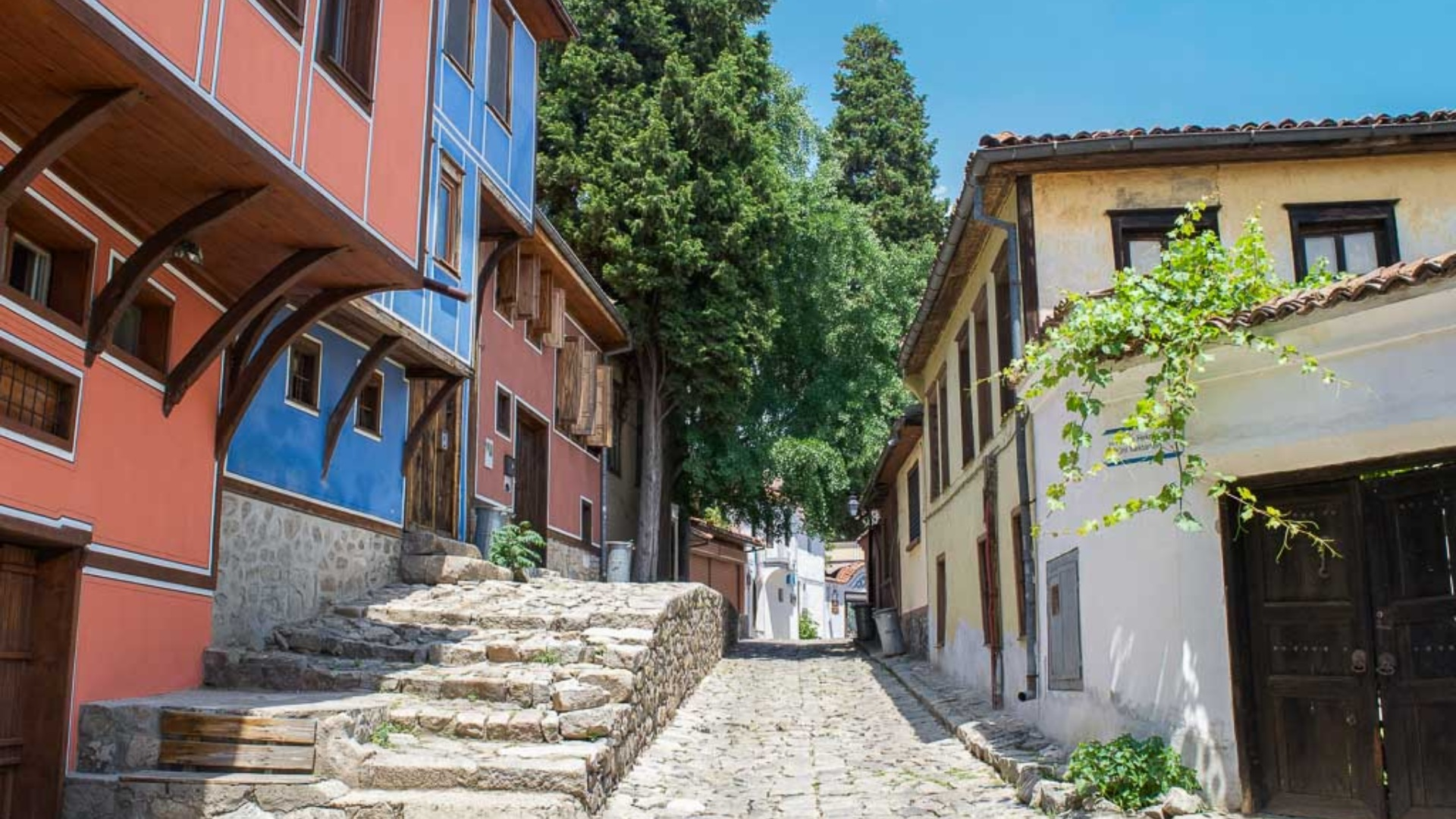
The Old Town showcases stunning Bulgarian Revival houses perched atop hills, blending seamlessly with Roman heritage and ancient ruins. Cobbled streets wind between beautifully ornamented and brightly coloured buildings that line the narrow lanes. A Plovdiv old town walking tour reveals why this city deserves its reputation as one of Bulgaria’s unmissable destinations.
Why You Should Explore Plovdiv Old Town on Foot?
Walking in Plovdiv allows you to appreciate the architectural details and hidden corners that you would miss from a vehicle. The Old Town sits atop three hills, making cars impractical and walking the natural choice.
The compact layout means you can cover the main sights in a few hours whilst still having time to wander down quiet side streets. Plus, the best views, courtyard cafés, and artisan workshops only reveal themselves to those exploring on foot.
Starting Point – Ancient Roman Theatre
Visit the Roman Theatre of Plovdiv
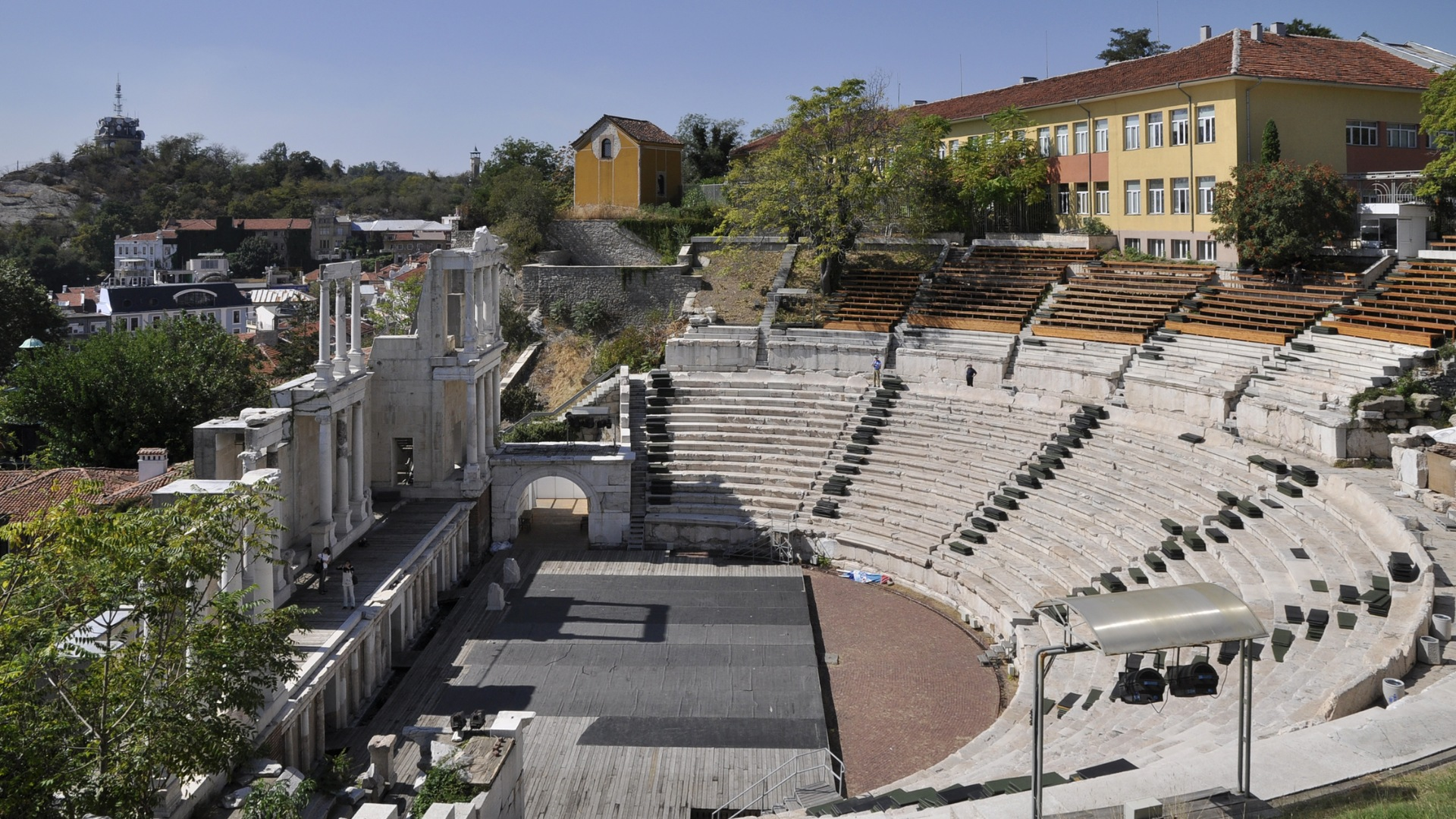 Begin your Plovdiv old town walking tour at the spectacular Roman Theatre, one of the best preserved ancient theatres in the world. This 2nd century AD amphitheatre seats around 7,000 people and still hosts concerts and performances today. The theatre was built into the natural slope of the hill, using the terrain to create perfect acoustics. Marble seating tiers climb the hillside, and when you stand in the orchestra pit, your voice carries clearly to the top rows without any amplification. The stage backdrop features ornate columns and decorative elements that hint at the theatre’s former grandeur.
You can go inside many of the Revival houses in Plovdiv Old Town, but the theatre remains accessible and free to explore outside performance times. Walk through the vomitoria, the arched passageways that allowed crowds to enter and exit efficiently. Climb to the upper seats for your first panoramic view over the city. From this vantage point, you see modern Plovdiv spreading out below whilst the Balkan mountains rise in the distance.
Best Photo Spots Around the Theatre
 The theatre provides countless photography opportunities. Early morning light illuminates the marble seating beautifully, whilst sunset casts dramatic shadows across the stage. Walk around to the upper approach for shots that capture the theatre framed by cypress trees. The view from the top tier looking down over the stage and out across the city works brilliantly. After exploring the theatre, head uphill along the cobbled streets into the heart of the Old Town.
Walk Through Plovdiv’s Historic Streets
Explore the Traditional Revival Houses
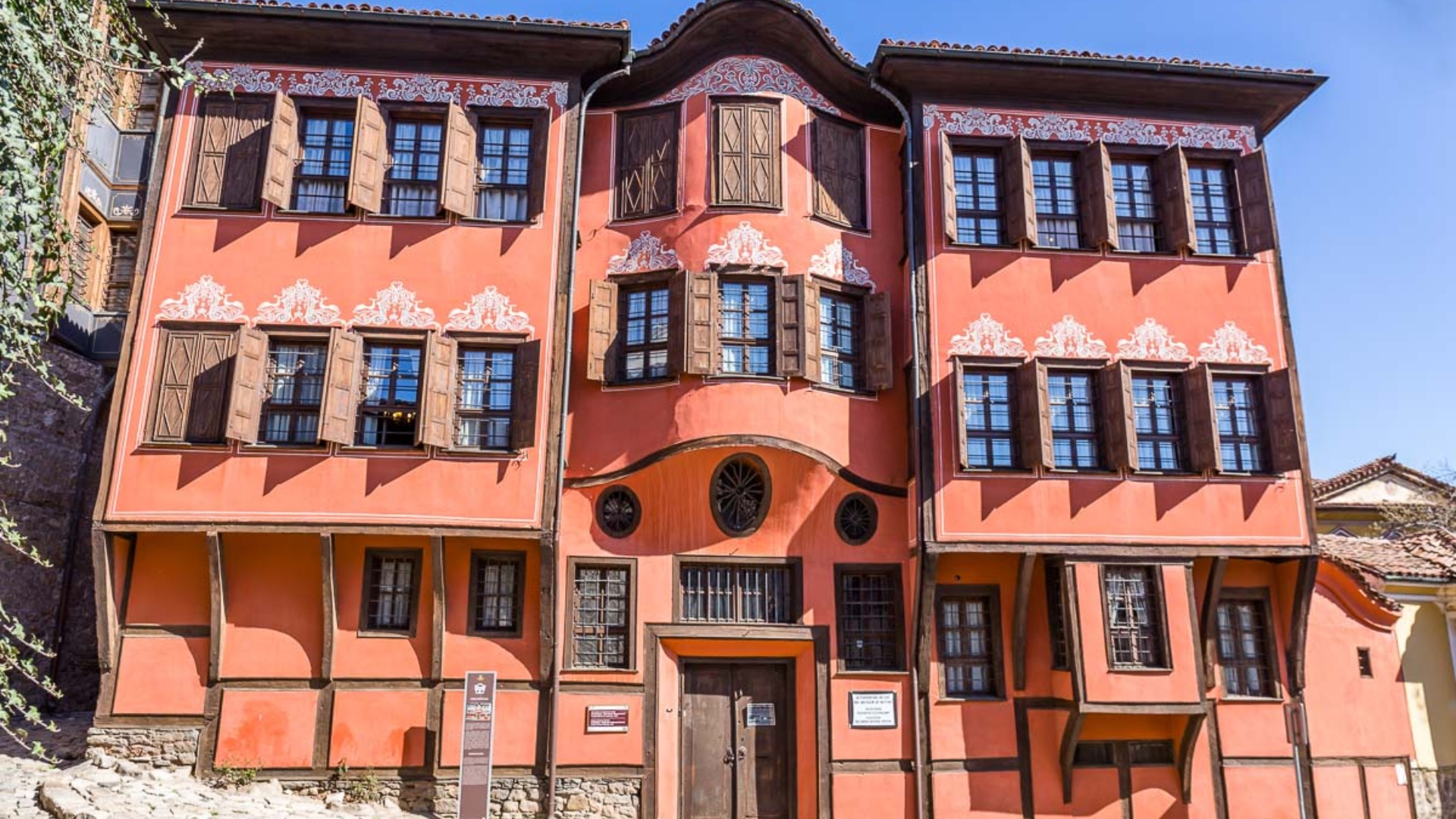 The Bulgarian Revival houses of Plovdiv old town Bulgaria stand as architectural masterpieces from the 18th and 19th centuries. These distinctive buildings feature overhanging upper floors that project beyond the ground floor. A funny little curiosity is that the second floor is usually wider than the first, creating the characteristic jutting appearance. Beautifully ornamented and brightly coloured buildings line every street, painted in vibrant yellows, blues, and reds.
Wander along Saborna Street, the main artery through the Old Town. Merchant houses with ornate wooden balconies and decorative plasterwork crowd both sides. Many buildings now house museums, galleries, and cafés whilst maintaining their historic exteriors. The craftsmanship in the woodwork, particularly the carved ceilings and decorative beams, demonstrates the wealth and artistic sophistication of 19th century Plovdiv.
Visit the Ethnographic Museum
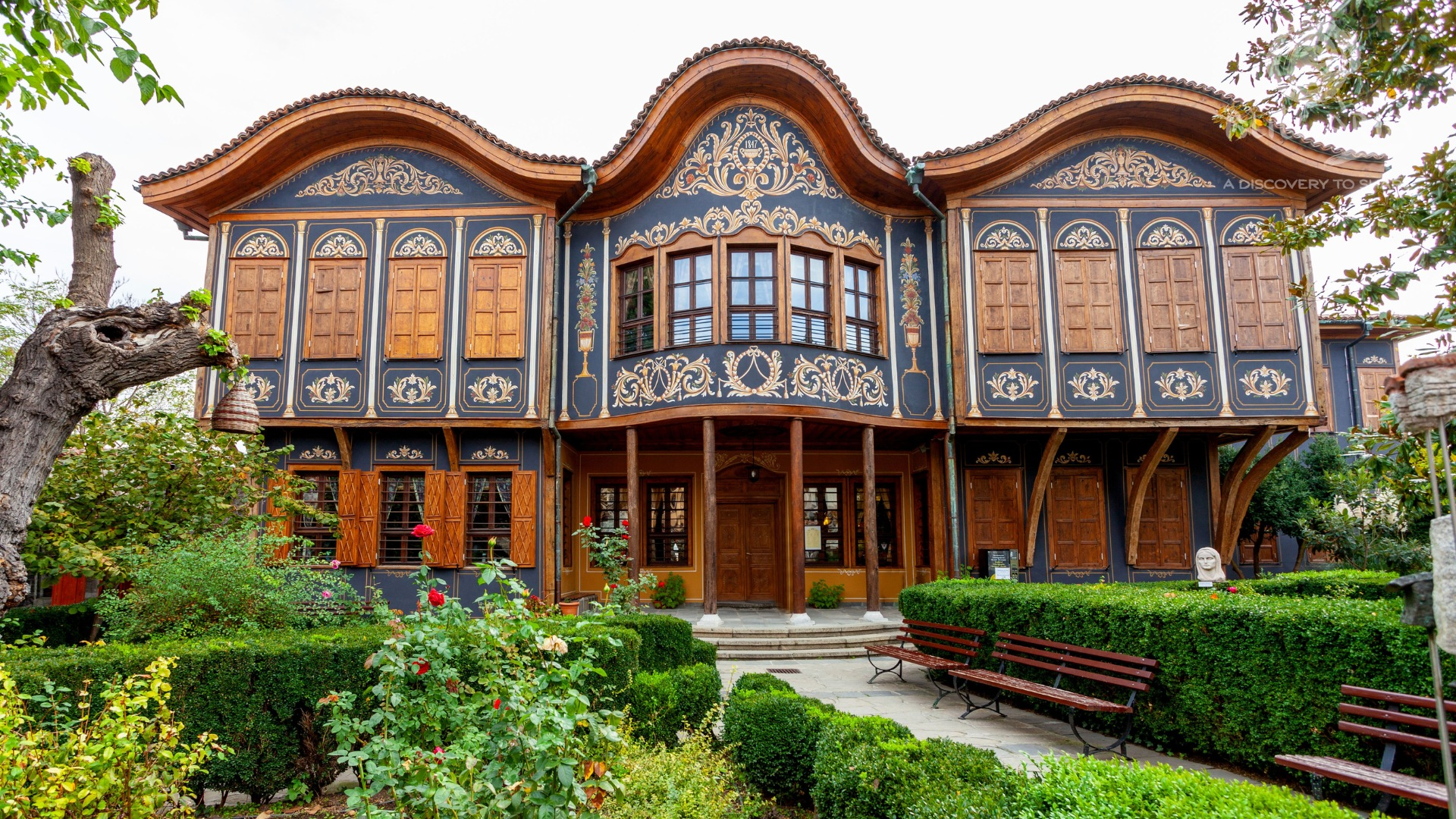 The Regional Ethnographic Museum occupies one of the finest Revival period houses in Bulgaria. Built in 1847 for a wealthy merchant, the Kuyumdzhioglu House showcases the lifestyle of Plovdiv’s elite during the National Revival period. The ground floor served commercial purposes, whilst the family lived on the elaborate upper floors. Intricately painted ceilings, carved wood panels, and period furnishings fill the rooms.
The museum collections display traditional Bulgarian clothing, textiles, and household items. Each room illustrates different aspects of Bulgarian heritage and daily life from past centuries. The building itself arguably outshines the exhibits, with its stunning blue exterior and symmetrical facade. Allow at least 45 minutes to explore properly. The small entry fee includes access to the beautiful courtyard and all exhibition rooms.
Discover Hidden Courtyards and Art Spaces
One joy of a Plovdiv old town walking tour involves stumbling upon hidden courtyards and artist studios tucked behind unassuming doorways. Many Revival houses have central courtyards surrounded by wooden galleries. These quiet spaces provide relief from the tourist crowds on main streets. Local artists have converted some houses into galleries and workshops where you can watch craftspeople at work.
The Kapana district, just below the Old Town proper, deserves exploration for its bohemian atmosphere. This former craftsmen’s quarter now buzzes with independent shops, cafés, and street art. Whilst not technically part of the ancient Plovdiv historic center, Kapana connects directly to the Old Town and extends your walking route naturally. The narrow lanes and creative energy make it feel like an artistic extension of the historic quarter.
Must Visit Cultural Landmarks in Plovdiv Old Town
The Ancient Stadium
The Ancient Stadium of Philippopolis sits partially buried beneath the modern pedestrian street. Built in the 2nd century AD, it could accommodate 30,000 spectators for athletic competitions and gladiatorial games. Only the northern curved end remains visible today, with marble seating tiers and supporting arches exposed. The rest lies beneath shops and buildings constructed over centuries.
Walk down into the excavated section to appreciate the scale and construction techniques. Information panels explain the stadium’s history and its role in ancient Plovdiv. The juxtaposition of Roman ruins with modern cafés surrounding them creates a surreal atmosphere unique to this ancient city. This stop adds essential Plovdiv cultural sites context to your walking tour.
Balabanov House
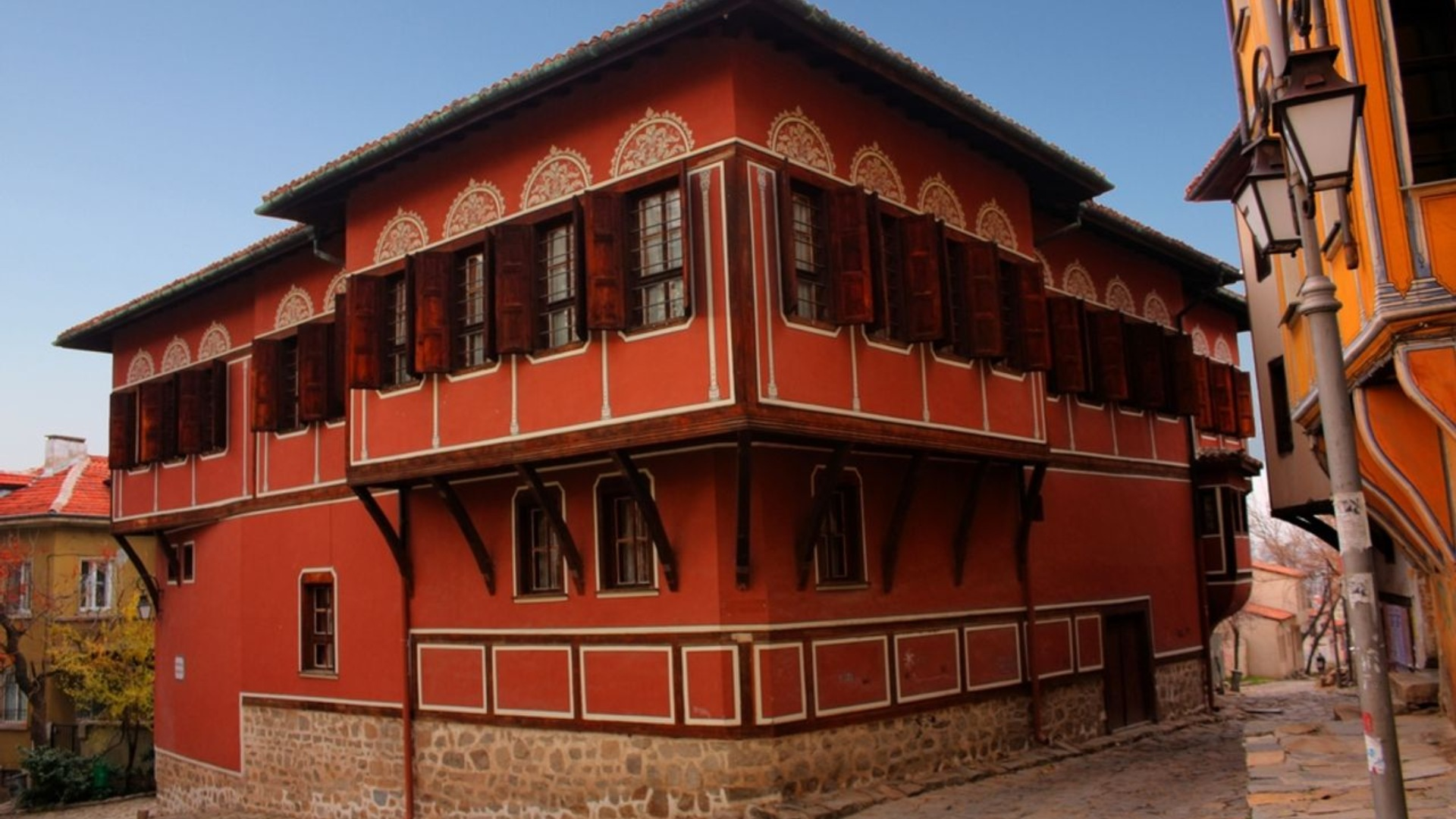 Balabanov House represents another architectural gem from the Revival period. Built in the mid 19th century, the house features the classic asymmetric design with an overhanging upper floor. The exterior combines stone and timber construction with elaborate decorative elements. The building now functions as a museum and cultural venue hosting temporary exhibitions and concerts.
The interior preserves original painted ceilings, ornate fireplaces, and period furniture. Each room displays different decorative styles popular during the National Revival. The house occasionally hosts classical music concerts, taking advantage of the excellent acoustics in the main salon. Check the schedule before your visit as some rooms may close during events.
Small Churches and Chapels
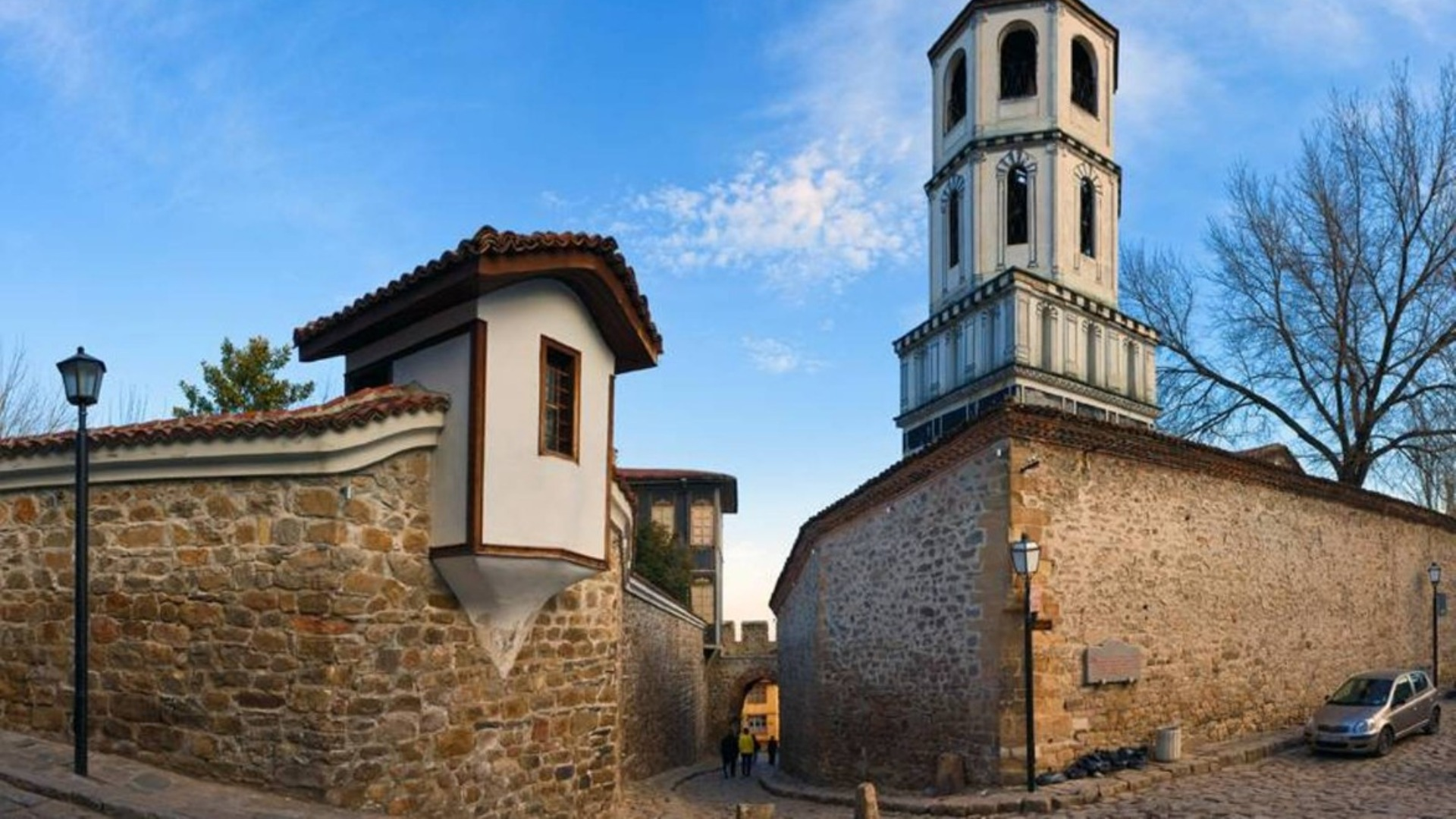
Plovdiv old town walking tour routes should include several small churches scattered throughout the hills. The Church of Saints Constantine and Helena dates from the 4th century, making it one of Bulgaria’s oldest churches. The current building reflects multiple reconstructions, but ancient foundations remain visible. Icons and frescoes from various periods decorate the modest interior.
The Church of the Virgin Mary sits higher on the hill, offering another example of Bulgarian Orthodox architecture. These churches remain active places of worship, so dress respectfully and check visiting hours. The quiet interiors provide contemplative breaks between exploring the busier streets and museums.
Best Scenic Viewpoints in Plovdiv Old Town
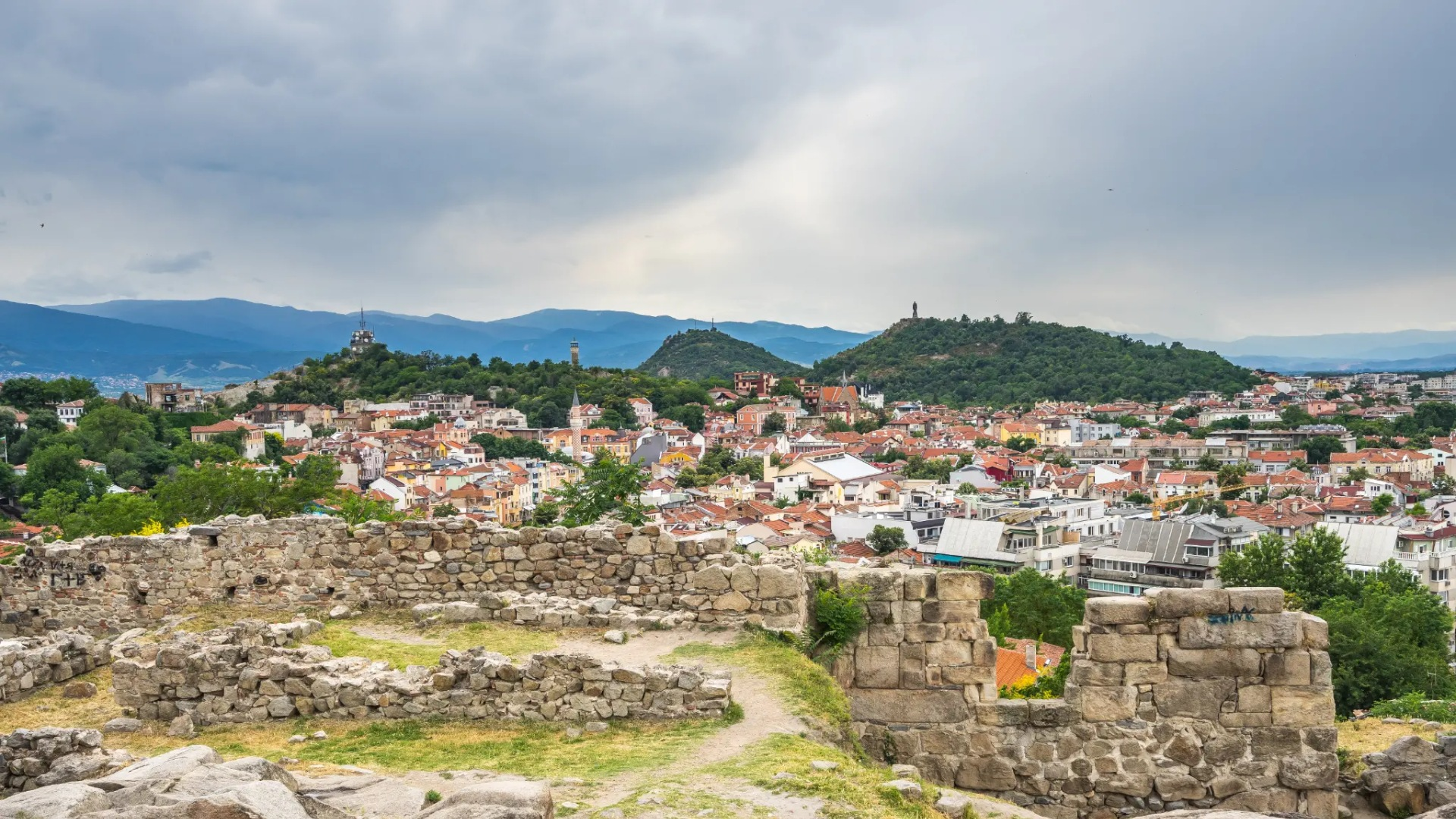
- Nebet Tepe, the highest of Plovdiv’s hills, delivers the most spectacular views. Climb the steep paths to the ancient Thracian fortifications at the summit. There are sweeping panoramic views over the Carpathian Mountains, the Balkan Peninsula, and the other five hills that surround the city. Plovdiv used to be the city of seven hills but one was flattened, so now there are only six. You can spot the many churches and mosques in the city below from this elevated position.
- The Hill of Time sits adjacent to Nebet Tepe. Nowadays the Hill of Time is home to a giant clock tower, but it has actually always been a hill of time, having first been inhabited by a giant sundial. The modern clock tower might seem out of place, but the hill’s timekeeping tradition stretches back millennia. Both viewpoints work perfectly for sunset when the city lights begin twinkling below.
- Several cafés and restaurants occupy historic houses with terrace seating that overlooks the valley. These provide comfortable spots to rest whilst enjoying the scenery. The Plovdiv sightseeing route naturally leads you past multiple viewpoints, so take advantage of each one. Early morning and late afternoon offer the best light for photography and the clearest air for distant mountain views.
Wrapping Up…
Is Plovdiv worth visiting? Absolutely, and exploring it through a Plovdiv old town walking tour remains the best way to experience this remarkable city. The combination of Roman ruins, Ottoman heritage, and Bulgarian Revival architecture creates layers of history visible at every turn.
Things to do in Plovdiv Old Town extend beyond the major landmarks to include simply wandering the cobbled streets and discovering your own favourite corners. The compact layout makes self guided exploration easy, though joining an organised Plovdiv walking tour provides historical context that enriches the experience. Whether you spend a few hours or a full day exploring Plovdiv old town Bulgaria, you will leave understanding why this ancient city captivates everyone who visits.