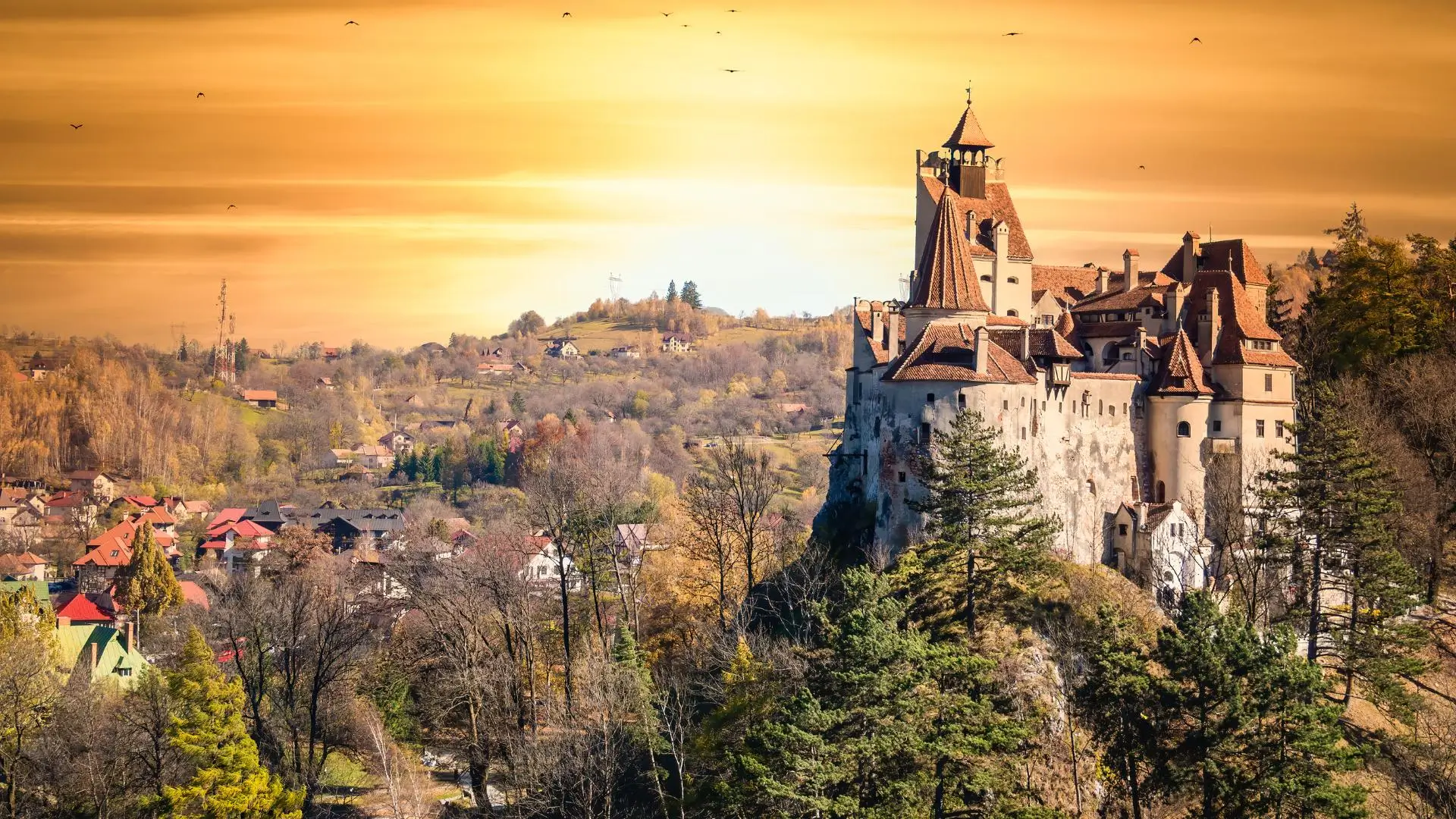
There’s something about Romania that catches you completely off guard. You’re driving through thick forest where morning mist hangs low in the valleys. Then suddenly, a castle appears on a hilltop. Not the kind you’ve only seen in photos, but something real. Something you can actually touch. Yet it still looks impossibly magical, like someone plucked it straight from a storybook and planted it in the Carpathians.
The best castles in Romania aren’t just old buildings you tick off a list. They’re living pieces of history that somehow survived invasions, wars, and centuries of change. When people ask me if these Romanian fairytale castles really look as stunning as they do online, I always laugh. The photos don’t even come close. There’s this atmosphere you can only feel when you’re actually there. When you’re climbing those worn stone steps. When you’re standing in courtyards that have witnessed centuries of stories.
This guide takes you through the most incredible castles to visit in Romania. Some are famous. Others are quiet secrets where you might wander alone for hours. Each one tells a different story. Each one offers something you won’t find anywhere else in Europe.
A-List Of 11 Best Castles in Romania
1. Bran Castle – The Iconic Legend of Transylvania
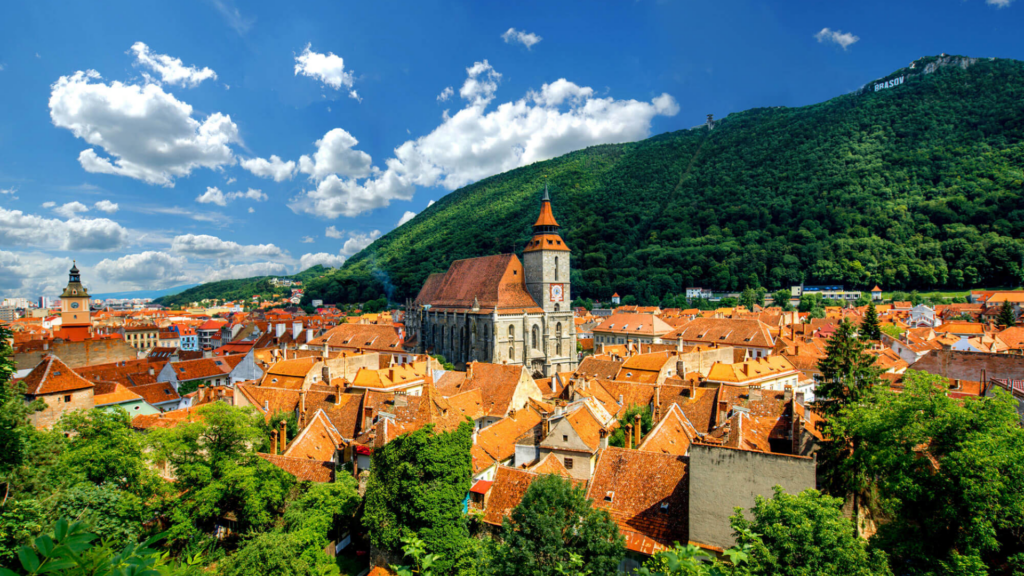
Let’s start with the big one. Bran Castle sits perched on a rocky cliff between two mountain ranges, and yes—it’s the fortress everyone calls Dracula’s Castle. The connection to Vlad the Impaler is sketchy at best. He probably passed through once or twice. But that hardly matters when you’re standing in front of it.
The castle was built back in the 14th century. What strikes you first isn’t the vampire stuff, though. It’s the sheer drama of where it sits. Narrow staircases wind up through the interior. They lead you past atmospheric rooms filled with furniture that actually belonged to the royal family in the 1900s. The views from up top stretch for miles across the valley.
If you visit in winter, snow transforms everything. It genuinely looks like a fairytale come to life. You understand immediately why this is one of the most famous Romania castles in the world. I’d advise you to get there early before the tour buses arrive. You’ll have the corridors mostly to yourself, and the whole experience feels more intimate. More personal.
The Bran Castle gift shop is massive. But the real treasure is just wandering the grounds when autumn light filters through the surrounding trees. This castle in Romania defines what most people picture when they think of Transylvania.
2. Peleș Castle – Royal Beauty in the Carpathians
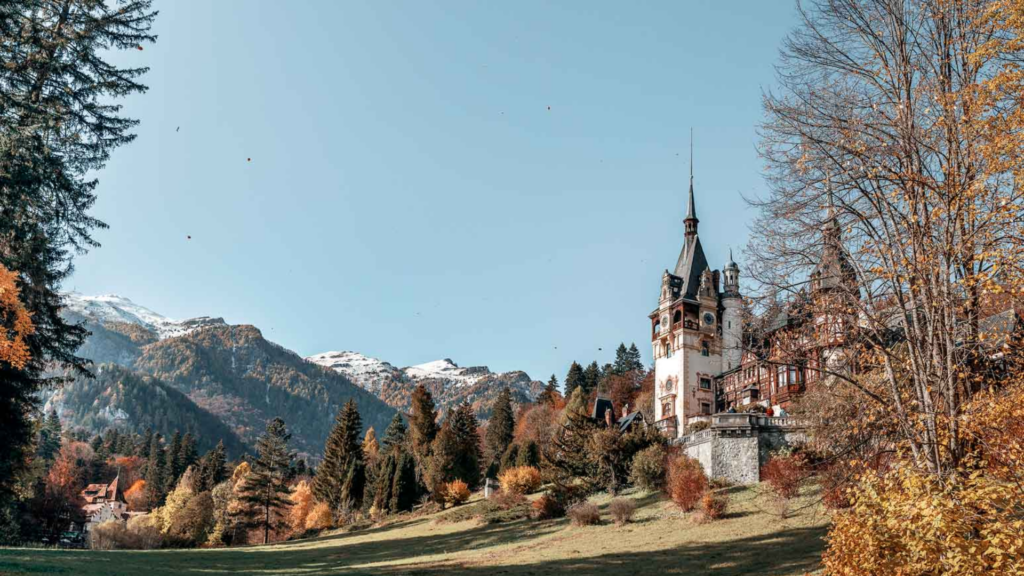
If Bran Castle gives you gothic drama, Peles Castle delivers pure royal elegance. The magnificent structure was built between 1873 and 1914 by King Carol I. He wanted a summer home that matched his status. What he created looks more like an elaborate Swiss chalet than a traditional fortress.
Around 160 rooms fill the interior. Gardens roll down the mountainside in waves of green. Walking through the halls feels like stepping back into a time when craftsmanship actually mattered. When every surface was an opportunity for art. The wood carvings alone could keep you occupied for hours. The collection of medieval weapons tells stories about Europe’s violent past.
Usually, Peleș Castle opens on Tuesdays, Thursday through Sunday from 9:15 AM to 5:00 PM, and Wednesdays from 10:00 AM to 5:00 PM. Entry costs around £26 for the full tour—ground floor and the two upper levels. Worth every penny, honestly.
This castle is one of those places that makes you grateful someone had the vision to create something so beautiful. And the wisdom to preserve it for visitors like us who show up centuries later. The Romanian castle stands as proof of what humans can achieve when ambition meets artistry. It’s absolutely essential on any list of the best castles in Romania.
3. Pelișor Castle – A Softer, More Intimate Royal Residence
Just a short walk from Peleș sits its smaller, quieter sibling. Pelișor Castle was built for Prince Ferdinand and Queen Mary of Romania. It has a completely different personality from its grand neighbour.
Queen Mary decorated the entire place herself. She blended Art Nouveau—which was hugely popular in the 1900s—with Byzantine, Celtic, and Neo-Romanian styles. The result is wonderfully eclectic. Deeply personal. The Golden Room is probably the most famous space here. Warm tones and intricate details show just how involved the Queen was in every decision.
Where Peleș impresses with scale, Pelișor charms with intimacy. You can almost imagine the royal couple having breakfast in these rooms. Arguing gently about furniture placement. Making real life happen within these walls.
Pelișor opens Thursday through Sunday from 9:15 AM to 5:00 PM, and Wednesdays from 10:00 AM to 5:00 PM. Tickets cost around £5.33. For travellers who want to slow down a bit, who prefer personal stories to grand spectacles, this pairs perfectly with Peleș. Together they show you the complete picture—the public magnificence and the private refuge.
4. Corvin Castle – A Gothic Masterpiece Full of Drama
If you thought Bran Castle looked dramatic, wait until you see Corvin Castle. This is gothic architecture taken to its absolute theatrical limit. Drawbridges span deep ravines. Towers seem to pierce the clouds. Chambers gather shadows in corners that never quite disappear.
The castle was built in the 15th century by John Hunyadi. That’s why some people call it Hunyadi Castle. It expanded over centuries into something that feels less like one building and more like a small fortified city. Walking through these corridors gives you a real sense of what life was like in medieval castles in Romania.
The stone walls are thick enough to withstand serious sieges. Ceilings soar overhead in ways that make you feel appropriately small. Everywhere you look, details speak to the castle’s military past. The knights’ hall. The chapel. The diet hall. Each space has its own character.
Photographers absolutely love this place. Especially during golden hour when sunset turns the stone warm and brings out textures you’d miss in harsher light. It’s one of those castles to visit in Romania that exceeds every expectation. Makes you stand there thinking about how many generations walked these same stones.
5. Făgăraș Fortress – A Massive Castle That Feels Almost Forgotten
Some of the most interesting fairytale castles Romania offers are the ones tourists skip. Făgăraș Fortress is exactly that kind of place. It’s enormous—one of the largest in the country. The moat actually still holds water. Courtyards are wide enough to hold festivals inside them.
Yet somehow it maintains this peaceful, almost melancholic atmosphere. Like it’s perfectly content being slightly overlooked by crowds rushing between Brașov and Sibiu. The fortress dates back to the 14th century. Most of what you see today comes from later rebuilds, though.
Inside you’ll find museums about the region’s history. Exhibits about various rulers who lived here. Displays that explain the complicated politics of medieval Transylvania. What makes it special isn’t any single feature. It’s the overall feeling of wandering through somewhere that’s stayed authentic without being over-restored.
The local authorities have done a great job maintaining it without sanitising its character. It absolutely deserves recognition among the best castles in Romania. I’m always surprised more people don’t include it in their plans.
6. Rasnov Fortress – Hilltop Ruins With Wide Views
There’s something raw and honest about Rasnov. This isn’t a palace. It was never meant to be beautiful. Teutonic Knights built it in the 13th century as a refuge during invasions. That practical purpose shows in every rugged wall.
The fortress sits high on a hillside overlooking the town. Getting up there involves a decent climb. Though there’s also a cable car if you’re not feeling energetic. What you find at the top are ruins that haven’t been completely restored. Walls that still show their age. Views that stretch for miles across the countryside.
It’s ideal for travellers who enjoy nature and history mixed together. Who like imagining what these places were like when they actively defended communities. On a clear day you can even see Bran Castle in the distance. That gives you a sense of how these fortifications were positioned strategically across the landscape.
If you’re planning a Romania road trip itinerary, Rasnov makes a perfect stop. Close enough to main routes that it doesn’t require a massive detour. Interesting enough that you’ll be glad you made the effort.
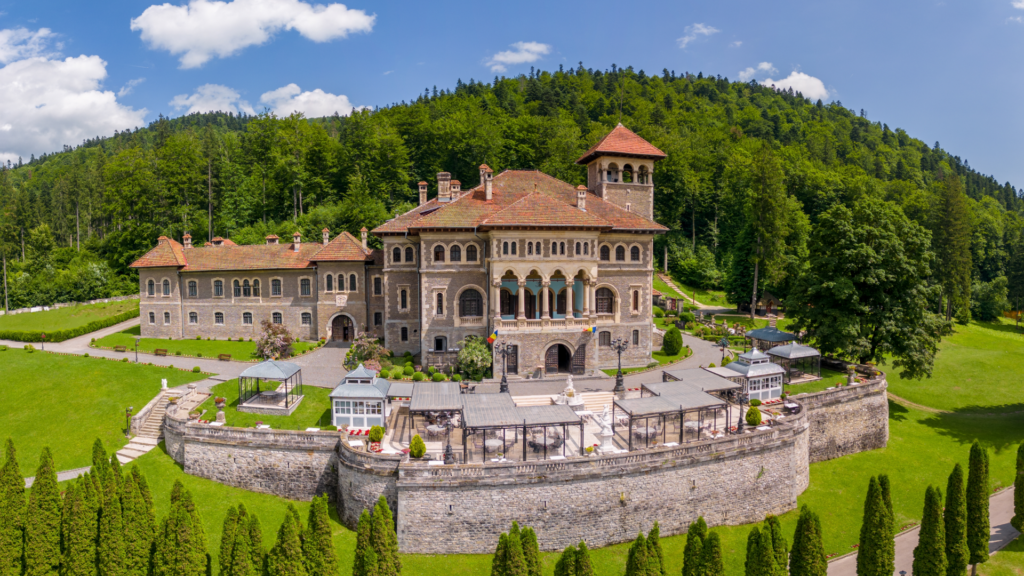
7. Cantacuzino Castle – A Grand View Over Busteni
Built in 1911 by Prince Gheorghe Grigore Cantacuzino, this castle in Romania sits on a hillside with views that absolutely steal your breath. The Bucegi Mountains rise behind you. The valley spreads out below in a panorama you won’t forget anytime soon.
The castle itself is beautifully preserved. Actually one of the best-preserved Romania castles you’ll find. Walking through its rooms shows you glimpses of how noble Romanian families lived a century ago. Everything feels elegant without being showy. Comfortable without being ordinary.
The gardens surrounding Cantacuzino Castle are magnificent. Winding pathways lead you past fountains and statues. Small waterfalls tumble down the slopes. There’s even a cave you can explore in the larger park area. That adds adventure to what might otherwise be just an architectural visit.
Inside you’ll find an art gallery worth spending time with. Works span several generations of Romanian artists. What strikes me most is how this place manages to feel grand and welcoming at the same time. Like the Prince who built it wanted to impress visitors but also make them feel at home.
It’s less famous than some other best castles in Romania. Which means you’ll often have space to wander at your own pace. To sit in the gardens and just absorb the atmosphere without feeling rushed.
8. Banffy Castle – A Beautiful Ruin That Feels Like a Film Set
Located in Transylvania, Banffy Castle offers a different kind of beautiful. It’s a ruin, yes. But not the sort that’s crumbling away forgotten. It’s in the middle of careful restoration. A process that’s been ongoing for years and might continue for years more.
The Banffy family built the original structure in the 15th century. It expanded dramatically over time into a baroque palace that must have been stunning in its prime. Wars and neglect took their toll. By the time restoration began, much had been lost.
What remains has this haunting quality. Like you’ve wandered onto a film set by accident. The unique architecture blends different styles from different centuries. Some rooms have been restored with period details. Others are still open to the sky with vegetation growing through floorboards.
It’s one of those Romanian fairytale castles that asks you to use your imagination more. To fill in the gaps. To picture what once was and what might be again. The ongoing restoration means each visit is slightly different. The castle slowly reveals more of itself year by year.
9. Hunedoara Fortress – A Castle With Layers of History
Wait—didn’t we already talk about Hunedoara? Not quite. Corvin Castle is the famous one. But there’s another fortress in the same region that often gets overlooked entirely.
This particular fortress has a more military past. Thick stone walls meant for defence rather than display. It’s peaceful compared to the more famous sites. Fewer tourists. More time to just stand and think about the layers of history in every stone.
Local stories abound here. Tales of battles fought and won. Of sieges endured. Of communities sheltering behind these walls when danger approached. The fortress isn’t as dramatically restored as some others. Which means you get a more authentic sense of what these structures were actually like.
It’s particularly appealing to history enthusiasts who want to dig deeper. Who aren’t satisfied with just surface-level stories. If you like wandering without a specific agenda, this fortress rewards that kind of attention.
10. Poenari Citadel – A Dramatic Climb Into the Mountains
Now we’re getting into proper adventure territory. Poenari Citadel is genuinely linked to Vlad the Impaler. Not vaguely like Bran Castle, but actually historically. This was one of his primary fortresses. A strategic stronghold positioned high in the Carpathians where it could control the valley below.
Getting there requires climbing over 1,400 steps up the mountainside. Sounds daunting, I know. But it becomes almost meditative once you find your rhythm. The ruins themselves are dramatic in their incompleteness. Walls that drop away to nothing. Towers open to the elements. Stones scattered across the mountaintop.
But the views. The absolutely remarkable views make every step worthwhile. You’re standing where Count Dracula himself once stood. Looking out over landscapes that haven’t fundamentally changed in centuries.
For adventure lovers who enjoy the best castles to visit in Romania that feel genuinely untouched, Poenari delivers. It hasn’t been commercialised or sanitised for mass tourism. Bring water. Wear proper shoes. Give yourself plenty of time. This isn’t the kind of visit you rush through.
11. Sâmbăta de Sus Brâncoveanu Castle – Elegant and Less Crowded
Let’s end somewhere quiet. Somewhere peaceful. Somewhere you might have entirely to yourself on a midweek morning. The Brâncoveanu Castle near Sâmbăta de Sus doesn’t have dramatic mountaintop positioning. Doesn’t have gothic architecture. But it has something equally valuable—tranquility.
The castle sits near a monastery. The combination creates this atmosphere of contemplative calm that’s increasingly rare. Gardens are lovely. Maintained but not manicured. Allowed to grow in ways that feel natural.
Inside, the rooms speak to a more recent past. This isn’t medieval—it’s from the 17th and 18th centuries. But that makes it no less interesting. You get a sense of how noble families actually lived during the later period. What daily life looked like. What they considered important.
For travellers who’ve already visited the famous sites, this is perfect. For those looking to explore best castles in romania without crowds. Who want to wander slowly and perhaps sketch or photograph without dodging tour groups.
The surrounding area is beautiful too. Hiking trails wind through the countryside. Traditional villages give you context for the castle’s place in the broader culture.
How to Choose Which Castles to Visit – A Mini Romania Travel Guide
With so many remarkable castles to visit in Romania, how do you actually decide? It depends entirely on what kind of traveller you are. What experiences you’re seeking.
- For families: Peles Castle and Bran Castle offer the best facilities. Proper toilets. Cafés. Gift shops. Relatively easy walking routes. The stories about Dracula and royal life engage children’s imaginations without overwhelming them.
- For architecture lovers: Prioritise Corvin Castle and Peles Castle. The level of craftsmanship rewards close examination. These are places you could visit multiple times and still notice new details.
- For dramatic views: Rasnov Fortress and Poenari Citadel deliver that sense of being perched on top of the world.
- For quiet escapes: Făgăraș Fortress and Sâmbăta de Sus offer peaceful exploration away from main tourist trails.
- For history enthusiasts: Focus on Corvin Castle, Hunedoara Fortress, and Poenari Citadel. The military past remains vividly present in these places.
First-time visitors should probably stick with the most accessible sites—Bran, Peles, and Corvin. Repeat visitors can venture to less-known gems that reveal different facets of castle culture. This Romania travel guide advice applies whether you’re spending a week or a month exploring.
Best Time to Visit Castles in Romania
Timing genuinely matters when planning which castles to visit in Romania. Summer brings the most reliable weather and longest opening hours. But it also brings the biggest crowds. Especially at Bran Castle and Peles Castle.
If you don’t mind navigating around tour groups, June through August offers warm days and plenty of evening light for photography. Autumn is genuinely magical, though. September and October transform the forests into riots of gold and amber. The Romanian fairytale castles look absolutely cinematic framed by those colours.
Crowds thin out considerably after mid-September. Yet weather remains pleasant enough for comfortable exploring. Winter has its own appeal. Snow transforms everything. Already dramatic structures become scenes lifted from storybooks.
Some remote fortresses close during winter, so check ahead. But places like Bran and Peles remain open. They become even more atmospheric under a blanket of snow.
Spring—April and May—brings wildflowers and fresh green light. Fewer tourists than summer. Better weather than winter. That sense of discovery that comes with travelling slightly off-season.
For photographers, autumn provides the best overall lighting. Softer sunshine. More interesting skies than the harsh brightness of summer.
How to Get Around Romania – A Soft, Helpful Overview
Romania has a surprisingly functional public transport system for a country that still feels quite rural.
- Trains connect major cities reliably. Not particularly quickly, but comfortably enough for longer journeys. Routes between Bucharest, Brașov, and Cluj-Napoca are frequent and well-maintained.
- Buses fill in the gaps. They reach smaller towns and villages trains don’t serve. Though schedules can be less predictable.
- For travellers who prefer independence, rental cars are readily available. Roads are generally safe, if occasionally quite winding through mountain regions. A Romania road trip itinerary gives you freedom to stop wherever catches your interest. A village market. A viewpoint. A small museum you spotted from the road.
Local tours are another option. Particularly for accessing remote castles where public transport doesn’t reach easily. Group sizes tend to be reasonable. Guides are knowledgeable. You don’t have to worry about navigation or parking.
Whatever approach you choose, build in flexibility. Romanian travel rewards spontaneity. Those moments when you take a detour because something looked interesting.
What to Expect When Visiting Romanian Castles
Practical matters worth knowing before you go. Most Romania castles involve quite a bit of walking. Often including staircases that are steep, narrow, or both. Medieval architects weren’t thinking about accessibility.
- Wear comfortable shoes with good grip. Some surfaces are smooth stone that becomes slippery when wet. Ticket prices vary considerably. From around £5 for smaller sites to £26 for comprehensive access to places like Peles Castle. Many locations offer reduced rates for students, seniors, or families.
- Guided tours are available at most major castles. Sometimes mandatory for certain sections. They’re generally worth doing at least once for historical context. Though they mean moving at the group’s pace rather than your own.
- Photography is usually permitted. But check specific rules. Some areas prohibit flash or tripods. If you’re serious about capturing these things to do in Romania, bringing good equipment matters. Interiors can be quite dark.
- Accessibility considerations: unfortunately, many structures simply weren’t built with wheelchair access in mind. Peles Castle has made efforts to accommodate visitors with mobility challenges for at least parts of the tour. But rugged fortresses like Rasnov or Poenari are essentially impossible for anyone who can’t handle stairs and uneven ground.
- Gift shops range from tasteful to tourist-trap territory. The best ones focus on local crafts. Books about Romanian history. Quality reproductions rather than mass-produced trinkets.
Frequently Asked Questions About Romania’s Castles
Which castle is the most beautiful?
That’s genuinely difficult to answer. They offer such different kinds of beauty. Peles Castle has the most refined architectural elegance. Corvin Castle delivers dramatic gothic spectacle. Bran Castle combines atmosphere with location in ways that feel quintessentially Romanian. My personal favourite shifts depending on mood and season.
Which Romanian castles are easiest to reach without a car?
Bran Castle and Peles Castle are both easily accessible via public transport. From Brașov and Sinaia respectively. Frequent buses run during tourist season. Trains connect to the nearest towns. Corvin Castle in Hunedoara is also reachable by train. Though you’ll want to check schedules in advance—they’re less frequent than the Brașov-Sinaia routes.
Are these castles good for kids?
Absolutely. Though some more than others. As family-friendly castles in Europe go, Bran Castle wins. Children love the Dracula connection and dramatic towers. Peles Castle impresses young visitors with its scale. The collection of weapons and armour fascinates them.
Final Thoughts – The Castles That Stay With You
Standing in the courtyard of a Romanian castle at dusk does something to you. The last tourists have departed. Staff are beginning to close up. You get this feeling that’s hard to describe properly.It’s not just appreciation for architecture. Not just respect for history. Though both are present. It’s something about the layers. Centuries of people who walked these same corridors. Made decisions in these halls. Looked out these windows and saw essentially the same mountains. The best castles in Romania aren’t just photogenic buildings. They’re places where the past remains tangibly present. Where you can almost hear echoes of conversations from hundreds of years ago. Each of the Romanian fairytale castles we’ve explored offers its own version of this experience. What I hope this guide provides isn’t just a list of castles to visit in Romania. Rather, a sense of possibility. The understanding that these places reward different kinds of attention. That you can visit for drama or peace. For education or simple wonder.